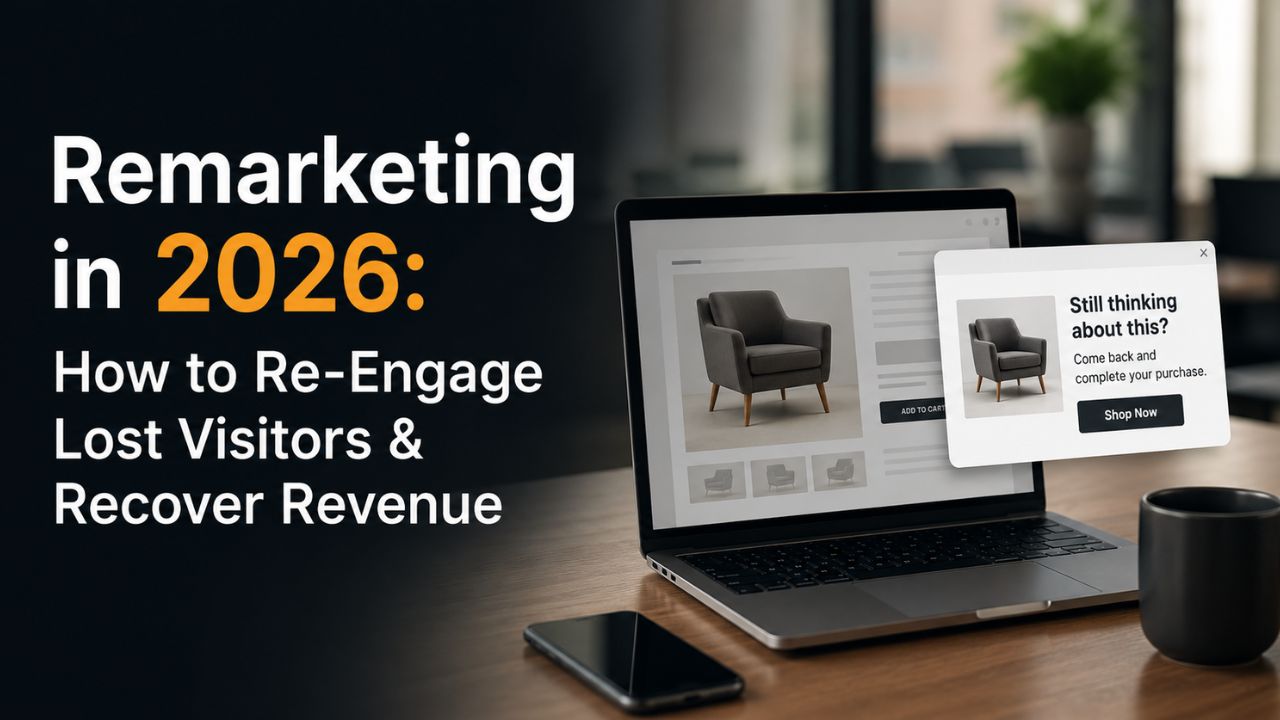
Someone visited your website. They spent time on your services page, maybe your pricing page too. Then they left.
No enquiry. No purchase. No callback request.
Most businesses write that visitor off. Smart businesses follow up. That follow-up – done through the right channels, with the right message, at the right time – is remarketing. And in 2026, it’s one of the highest-ROI paid advertising strategies available for Indian businesses.
This is your complete remarketing strategy 2026 guide – what it is, how it works across platforms, and exactly how to set up campaigns that bring real revenue back, not just traffic.
What Is Remarketing and Why Does It Work?
Remarketing (also called retargeting) is the practice of showing targeted ads to people who have previously visited your website, used your app, or interacted with your content – and then left without converting.
The logic is simple: warm audiences convert far better than cold ones.
Someone who visited your GST filing services page and left is infinitely more likely to convert from a well-timed ad than a stranger who’s never heard of you. They already know you exist. They already showed intent. They just didn’t act yet – and remarketing gives them a reason to come back.
The Numbers Behind Remarketing
- Website visitors who are retargeted with ads are 70% more likely to convert than cold audiences
- Remarketing audiences typically show 3–5x higher click-through rates than standard display ads
- Cost per acquisition from retargeted visitors is consistently lower than from prospecting campaigns, because the audience is already warm
In India’s competitive digital landscape, where acquisition costs are rising and attention spans are short, remarketing is often the difference between a campaign that breaks even and one that generates strong ROI.
How Remarketing Works in 2026
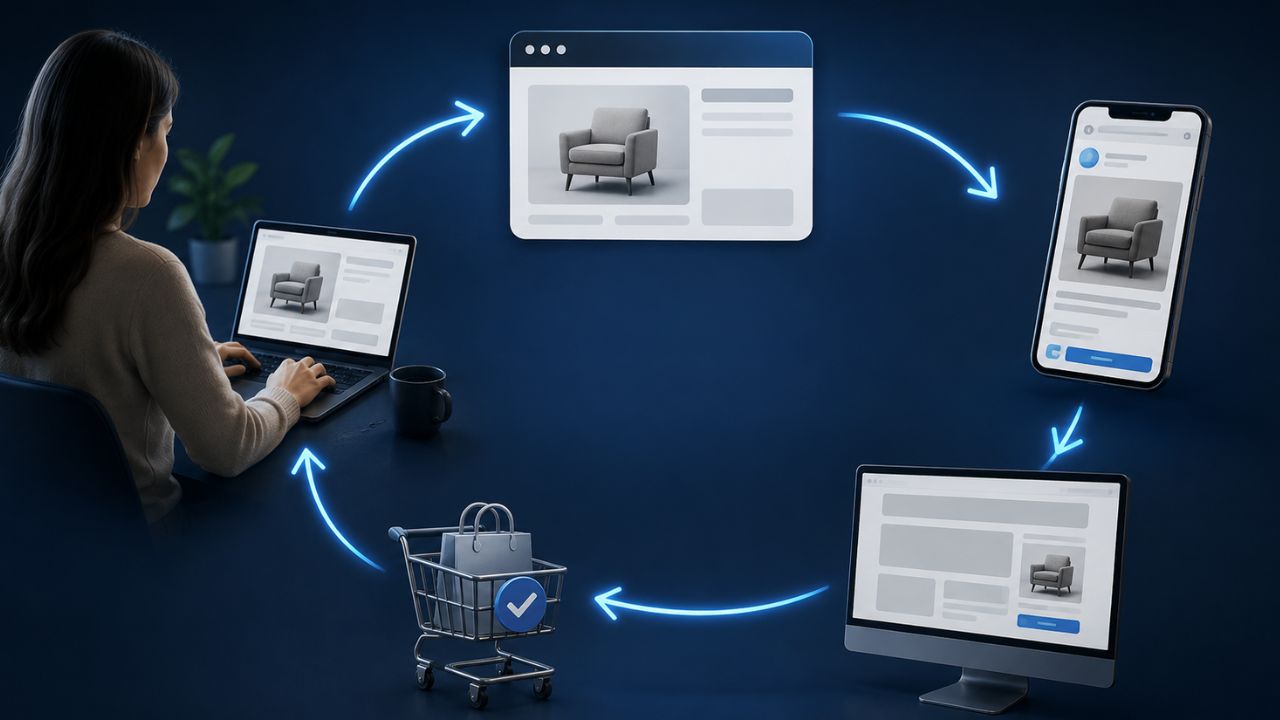
The mechanics are straightforward. A tracking pixel – a small snippet of code – is placed on your website. When a visitor arrives, the pixel fires and adds them to a remarketing audience. When that same visitor browses other websites, uses YouTube, scrolls Instagram, or searches on Google, your ads follow them.
In 2026, remarketing has expanded beyond pixels. Customer match remarketing allows you to upload your CRM contact list – email addresses of leads, past customers, enquirers – and target those specific people with ads across Google, YouTube, and Gmail, even if they’ve never visited your website through a tracked session.
The two primary platforms for remarketing ads 2026 are Google (Display Network, Search, YouTube, Gmail) and Meta (Facebook and Instagram). Each has different strengths, different audience sizes, and different use cases – covered in detail below.
Google Remarketing Guide: The Platform Breakdown
Google Display Remarketing
Google Display Network reaches over 90% of internet users globally – including a massive proportion of Indian internet traffic across news sites, apps, regional language content platforms, and thousands of other properties.
Display remarketing shows banner ads to past visitors as they browse across this network. It’s best used for:
- Brand recall campaigns – keeping your business visible to people in a longer consideration phase
- Announcing promotions or offers to people who previously showed purchase intent
- Multi-step funnels – showing awareness-level creative first, then conversion-focused creative as the audience segment moves through the funnel
Google Search Remarketing (RLSA)
Remarketing Lists for Search Ads (RLSA) is one of the most underused and highest-performing remarketing tactics available.
RLSA lets you adjust your Search campaign bids – or serve entirely different ad copy – specifically for past website visitors when they search on Google. If someone visited your pricing page and then searches your competitor’s brand name, you can bid aggressively to show a targeted comparison ad.
Use RLSA to:
- Increase bids for past visitors searching high-intent terms (they’re significantly more likely to convert)
- Show tailored ad copy acknowledging the previous visit (“Still considering? Here’s a limited offer”)
- Exclude past converters from search campaigns to avoid paying for clicks from existing customers
YouTube Remarketing
YouTube remarketing shows video ads to past website visitors as they watch content on YouTube. In India, YouTube has over 500 million monthly users – making it an essential channel for reach among mobile-first audiences.
Video remarketing works particularly well for:
- Service businesses explaining a complex offer to warm prospects
- eCommerce brands showing product videos to cart abandoners
- Building trust with a mid-funnel audience that needs more information before converting
Gmail Remarketing
Gmail Sponsored Promotions (GSP) show ads in the Promotions and Social tabs of Gmail to past visitors or customer match audiences. These ads expand into a full email-like format and are effective for detailed offer communication – particularly for high-consideration B2B services or premium consumer products.
Retargeting Campaigns India: Platform Strategy
Meta (Facebook & Instagram) Retargeting
Meta’s retargeting capabilities are powered by the Meta Pixel on your website and the Conversions API for server-side tracking. In 2026, with increasing browser privacy restrictions, the Conversions API is essential for maintaining accurate audience data – businesses relying solely on pixel tracking are losing a significant portion of their remarketing audience.
Meta retargeting works exceptionally well for:
- eCommerce businesses remarketing to cart abandoners and product page visitors
- Consumer brands with visual products (fashion, home decor, food, lifestyle)
- Businesses with longer sales cycles needing multi-touch nurturing across 7–30 day windows
The core Meta retargeting audiences to build:
- All website visitors (last 30 days)
- Product/service page visitors (last 14 days) – higher intent than general visitors
- Cart abandoners (last 7 days) – highest intent, deserves highest bid and most specific creative
- Video viewers (25%, 50%, 75% completion) – warm but earlier stage
- Engaged Instagram/Facebook followers – interacted with your content but haven’t visited your site
Building a Remarketing Funnel That Actually Converts
The mistake most businesses make with remarketing: they show the same ad to every past visitor forever. The visitors who bounced from your homepage in 5 seconds have very different intent from visitors who spent 4 minutes on your pricing page.
Segment Your Audiences by Intent Level
High intent (convert now):
- Pricing page visitors
- Contact page visitors who didn’t submit
- Cart abandoners
- Service-specific page visitors
Strategy: Direct conversion ads. Strong CTA. Limited-time offer or specific incentive. Maximum bid.
Medium intent (nurture):
- Blog readers
- About page visitors
- Product category browsers (without specific product view)
Strategy: Value-add content. Trust-building testimonials. Case studies. Softer CTA.
Low intent (brand recall):
- Homepage bouncers (under 30 seconds on site)
- General traffic from broad campaigns
Strategy: Brand awareness. Lower bids. Frequency cap to avoid overexposure.
Set Frequency Caps
Remarketing without frequency caps is one of the fastest ways to damage brand perception. Someone who sees your ad 20 times in a week doesn’t become more likely to convert – they become annoyed and associate your brand with intrusiveness.
Set frequency caps at:
- Display: 3–5 impressions per user per day
- YouTube: 2–3 views per user per week
- Meta: optimise for reach or set manual frequency caps in campaign settings
Match Creative to the Audience Segment
High-intent audiences (pricing page visitors, cart abandoners) should see:
- Specific product or service they viewed
- Social proof (reviews, ratings, client names)
- A clear, urgent CTA (“Book your consultation – limited slots this month”)
Mid-funnel audiences should see:
- Case studies and results
- Comparison content (“Why clients choose us over [category]”)
- FAQs addressing common objections
Cold remarketing audiences should see:
- Brand story content
- Educational value
- Problem-awareness messaging
Key Technical Setup for 2026
Google Tag Manager
If you’re not running Google Tag Manager, start there. GTM allows you to deploy and manage all tracking pixels (Google Ads, Meta Pixel, Conversions API) from a single interface – without needing developer involvement for every change.
Conversions API (Meta)
With iOS privacy updates and browser cookie restrictions, pixel-only tracking now misses a significant portion of conversions. The Meta Conversions API sends event data directly from your server to Meta – bypassing browser-level restrictions. In 2026, running the Conversions API alongside the pixel is the standard setup for any serious Meta remarketing campaign.
Audience Sizes and Minimums
- Google Display remarketing requires a minimum of 100 active visitors in the audience
- Google Search (RLSA) requires a minimum of 1,000 active visitors
- Meta requires a minimum of 100 people for custom audiences to be usable
For new businesses or low-traffic sites, remarketing audiences build slowly. Focus on driving qualified traffic first – then remarketing audiences accumulate naturally as a byproduct.
The Bottom Line
Remarketing is not a standalone tactic – it’s the recovery layer that makes your entire paid advertising strategy more efficient.
Every prospecting campaign you run – Google Search, Facebook Ads, influencer partnerships, organic social – generates visitors who don’t convert on the first visit. Without remarketing, those visitors are gone. With a well-structured remarketing funnel, a significant portion of them come back and convert at a fraction of the cost of acquiring a new cold visitor.
Want BeSky Marketing to Set Up Your Remarketing Campaigns?
Frequently Asked Questions (FAQs)
Q1. What is the difference between remarketing and retargeting?
Remarketing and retargeting are mostly used interchangeably. Both involve showing ads to people who previously interacted with your business to bring them back.
Q2. How long should my remarketing window be?
It depends on your sales cycle. Use 7–14 days for quick purchases and 30–90+ days for high-consideration services or B2B.
Q3. How much budget should go to remarketing vs prospecting?
A good starting point is 20–30% for remarketing and 70–80% for prospecting. Remarketing often delivers higher ROAS because the audience is already familiar with your brand.
Q4. Does remarketing work for B2B businesses in India?
Yes. B2B remarketing works well due to longer decision cycles. Channels like Google Display, YouTube, RLSA, and CRM-based targeting help re-engage decision-makers.
Q5. How do I stop remarketing from becoming annoying?
Use frequency caps, audience exclusions, and shorter remarketing windows. Also rotate creatives so users don’t repeatedly see the same ad.
