

The beauty and personal care industry is highly competitive online. Customers now research ingredients, compare products, read reviews, and look for recommendations before making a purchase. For brands selling skincare, haircare, cosmetics, grooming products, or wellness-related personal care items, strong organic visibility can make a significant difference.
A well-planned eCommerce SEO strategy helps brands attract relevant visitors, improve product visibility, and turn search traffic into customers. However, successful SEO is not about repeating keywords. It requires understanding search intent, optimizing e-commerce pages, creating useful content, and building trust.
1. Understand Your Target Audience and Search Intent
Before optimizing your website, identify what your customers are searching for and why they are searching for it. Beauty shoppers may search for a specific product, ingredient, skin concern, hair problem, or product comparison.
For example, customers may search for:
- Best moisturizer for dry skin
- Sunscreen for oily skin
- Vitamin C serum for beginners
- Sulfate-free shampoo
- Natural skincare products
- Best face wash for sensitive skin
Understanding these different search intents allows you to create appropriate product, category, and informational pages. A visitor searching for a product may be ready to purchase, while someone searching for skincare advice may still be researching.
2. Build a Relevant Keyword Strategy
Keyword research is an important part of Beauty ecommerce SEO, but brands should focus on relevance rather than simply targeting high-volume keywords.
Create keyword groups around:
- Product categories
- Ingredients
- Skin and hair concerns
- Product benefits
- Specific audiences
- Product comparisons
- Buying questions
- Brand-related searches
For example, instead of targeting only “skincare,” a brand could create content around searches such as “moisturizer for sensitive skin” or “how to choose a cleanser.”
Each keyword group should be mapped to the most relevant page. This prevents multiple pages from competing for the same search and creates a clearer website structure.
3. Optimize Product and Category Pages
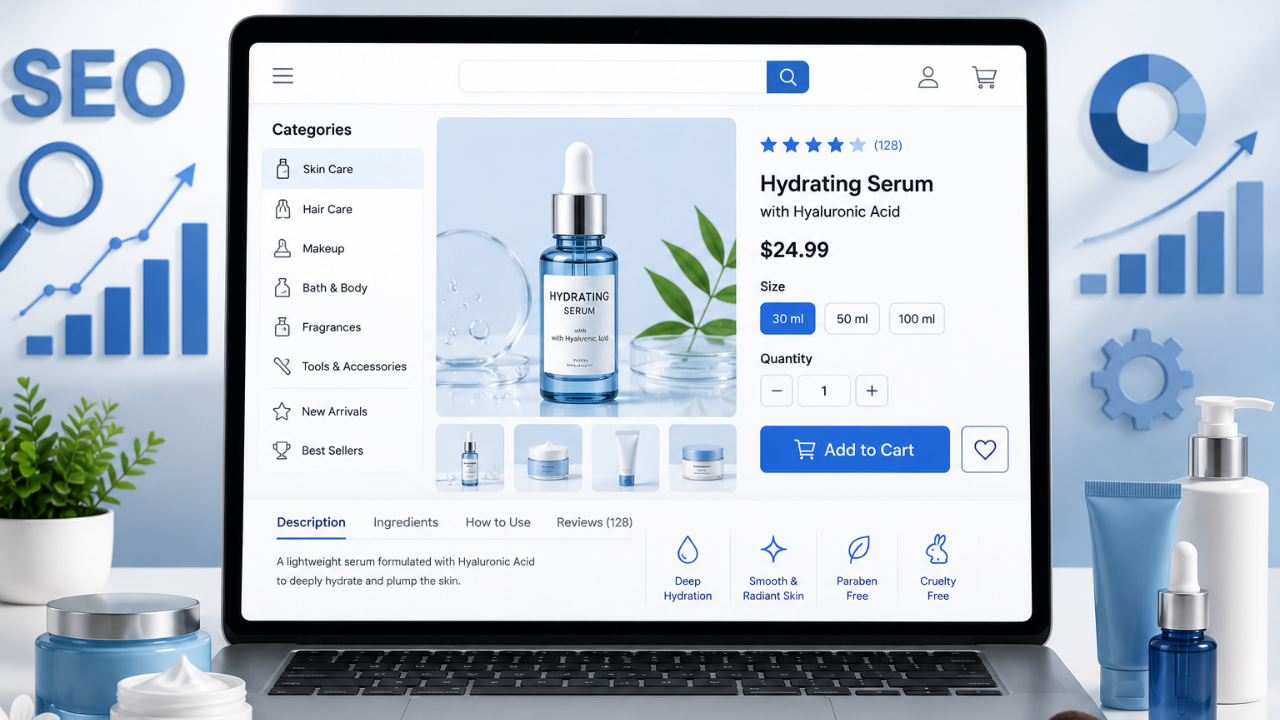
Product pages are some of the most valuable assets for an e-commerce beauty website. Good optimization helps search engines understand your products while giving shoppers the information they need to make purchasing decisions.
If you are wondering how to rank beauty products on Google, start with the fundamentals. Optimize your:
- SEO titles and meta descriptions
- Product names
- Product descriptions
- Headings
- Product images and alt text
- URLs
- Ingredient information
- Product benefits
- Usage instructions
- Customer reviews
- FAQs
- Relevant structured data
Avoid copying descriptions from manufacturers. Write original content that explains what the product does, who it is suitable for, how it should be used, and what makes it different.
4. Create Helpful Content for Beauty Customers
Beauty customers often have questions before purchasing. Creating useful content can help your brand reach people earlier in the buying journey.
Useful topics can include:
- How to Build a Basic Skincare Routine
- How to Choose the Right Sunscreen
- What Does Vitamin C Do for Skin?
- How Often Should You Wash Your Hair?
- Serum vs. Moisturizer: What’s the Difference?
- How to Choose Products for Sensitive Skin
This content supports how to increase organic traffic for beauty brands because it allows your website to target informational searches as well as product-related queries.
For AEO, answer questions directly at the beginning of relevant sections. Use clear headings, short paragraphs, bullet points, FAQs, and easy-to-understand explanations. This makes content useful for readers and easier for search and AI-powered systems to interpret.
5. Strengthen Your Technical SEO
A technically healthy website makes it easier for search engines to crawl, understand, and index your pages. This is an essential part of SEO for e-commerce website performance.
Pay attention to:
- Mobile usability
- Page speed
- HTTPS security
- XML sitemap
- Robots.txt
- Canonical URLs
- Duplicate content
- Broken links
- Indexation
- Structured data
- Website navigation
E-commerce websites can experience technical problems because of filters, product variations, duplicate URLs, and discontinued products. Regular technical audits can help identify and fix these issues.
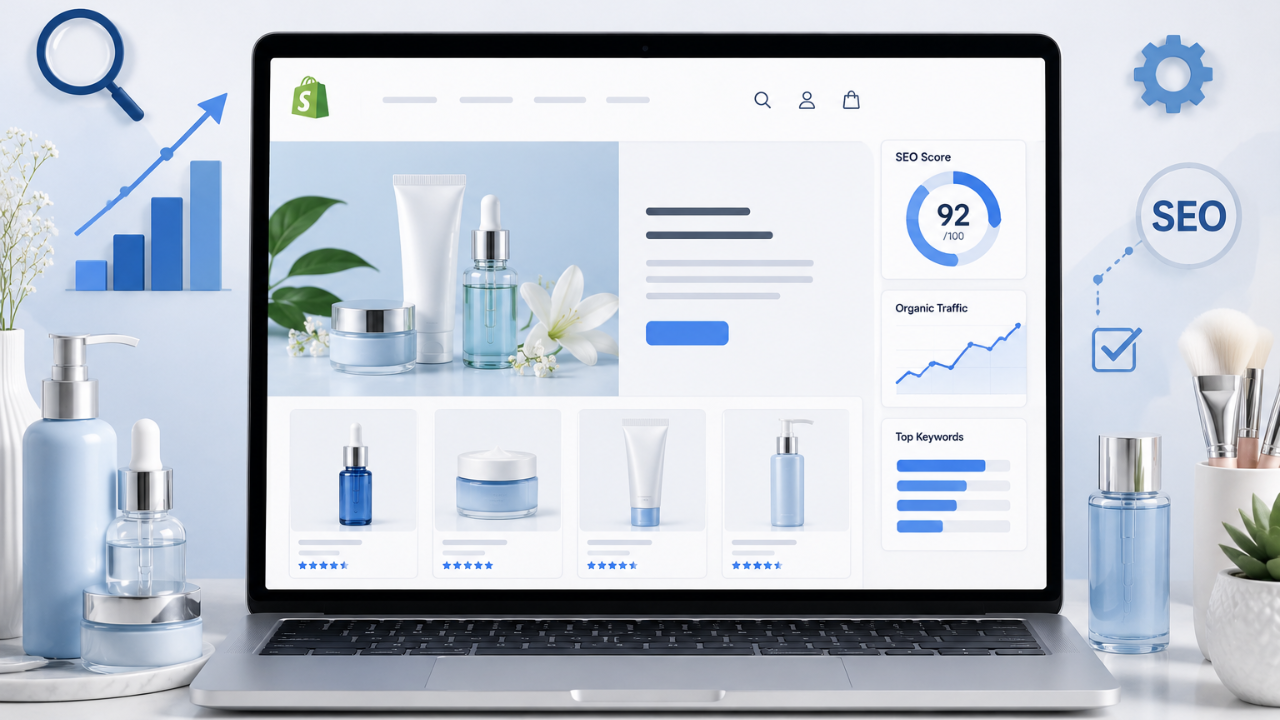
6. Build Authority and Trust
Beauty and personal care customers want reliable information about ingredients, product usage, benefits, and suitability. Building trust should therefore be an important part of your SEO strategy.
Brands can strengthen authority through:
- Expert contributions
- Original research
- Product testing information
- Genuine customer reviews
- Relevant media coverage
- Industry publications
- Digital PR
- High-quality backlinks
This is where eCommerce SEO services can provide value when they focus on long-term organic growth rather than shortcuts or low-quality link building.
At Besky Marketing, the focus is on combining technical optimization, content, authority building, and search intent to create a sustainable organic strategy for e-commerce brands.
7. How to Improve SEO for Beauty Brands Continuously
SEO is not a one-time activity. Once your strategy is implemented, monitor organic traffic, rankings, impressions, click-through rates, product-page visits, conversions, and revenue.
If a page receives impressions but few clicks, improve the title and meta description. If it receives traffic but generates few sales, review the product information, images, reviews, pricing, trust signals, and overall user experience.
Testing and improving these elements can gradually strengthen organic performance.
Our Approach to Beauty Brand Growth
At Besky Marketing, our approach is based on practical experience and a clear understanding of the beauty and personal care industry. We have worked with 30+ beauty brands, giving us hands-on experience with different products, audiences, and ecommerce challenges. The positive feedback we have received from our clients reflects our commitment to quality, communication, and consistent SEO work.
Our approach focuses on:
- Real Experience: Worked with 30+ beauty and personal care brands across different niches.
- Industry Expertise: Understand the SEO challenges related to beauty products, categories, ingredients, and customer search behavior.
- Customized Strategies: Create SEO strategies based on each brand’s products, audience, competition, and goals.
- Helpful Content: Develop content that answers real customer questions and demonstrates useful industry knowledge.
- Technical Expertise: Focus on website structure, product-page optimization, internal linking, indexing, and other technical SEO factors.
- Positive Client Feedback: Our work has received positive responses from the beauty brands we have worked with.
- Trust & Transparency: Focus on clear communication, realistic expectations, and consistent reporting.
- Continuous Improvement: Regularly analyze SEO performance and refine strategies based on data and changing search behavior.
Conclusion
eCommerce SEO for beauty and personal care brands requires a customer-focused approach rather than keyword repetition. Brands need to understand search intent, optimize their products and categories, publish useful content, maintain strong technical foundations, and build genuine authority.
Whether you operate a Shopify store or another e-commerce platform, the goal should be to make your website useful for both shoppers and modern search systems. With consistent optimization and valuable content, brands can improve organic visibility and create more opportunities for sustainable growth.
A strategic approach from Besky Marketing can help beauty and personal care businesses adapt their SEO, AEO, and ecommerce strategies to changing search behavior while keeping the focus on users and business results.
FAQs
What is an effective SEO strategy for personal care brands?
An effective SEO strategy for personal care brands combines keyword research, optimized product and category pages, helpful content, technical SEO, internal linking, authority building, and continuous performance monitoring.
How can beauty brands increase organic traffic?
Create useful content around customer questions, optimize product pages for relevant searches, improve technical SEO, build authoritative backlinks, and consistently update important pages.
Is SEO important for beauty e-commerce websites?
Yes. SEO can help beauty brands attract customers who are actively searching for products, solutions, ingredients, and advice, creating opportunities for long-term organic growth.
How can AEO help beauty brands?
AEO helps brands structure content around clear questions and direct answers. FAQs, concise explanations, descriptive headings, and useful supporting information can make content easier for search engines and AI-powered systems to understand.
