
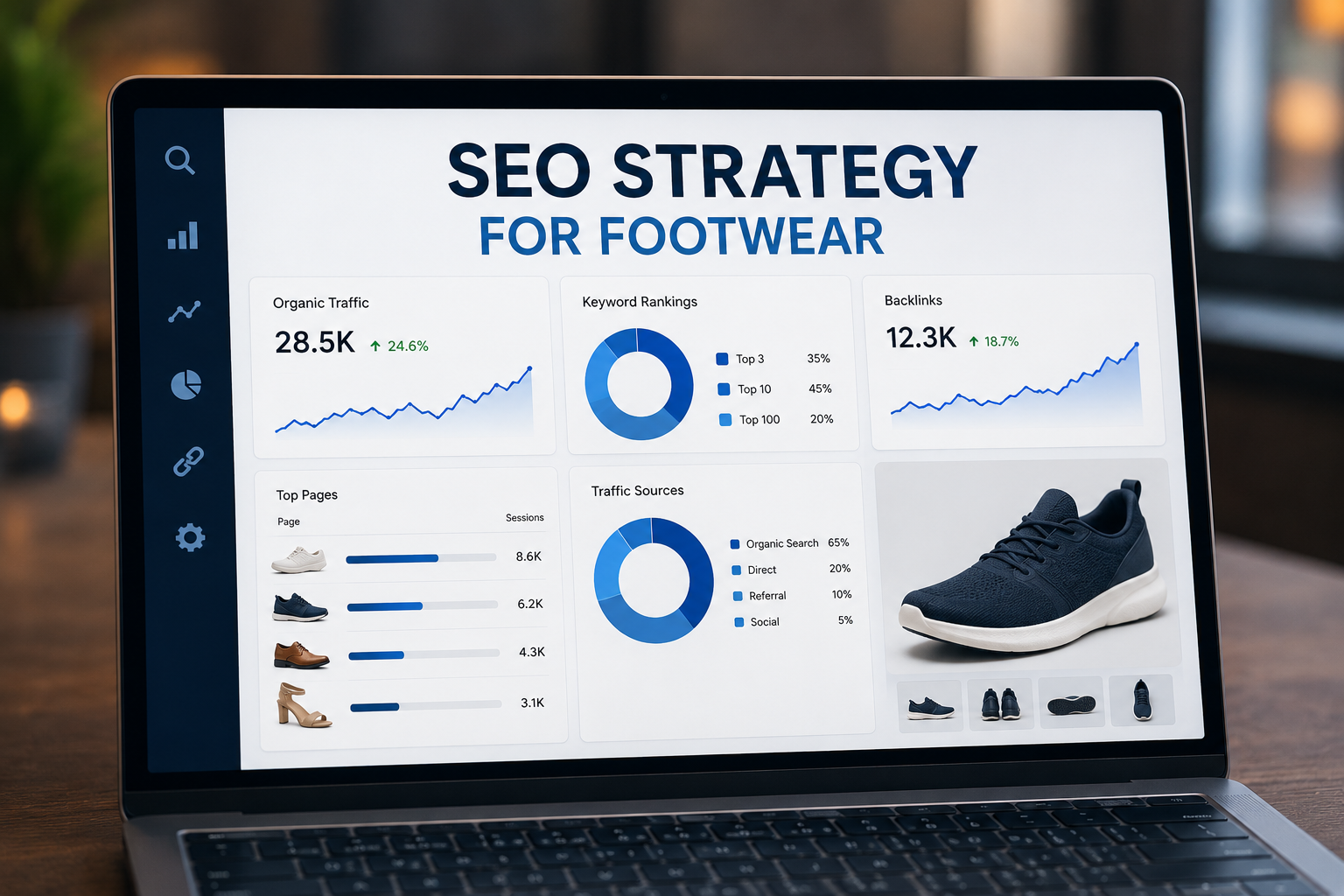
Launching a footwear brand is only the first step. Whether you sell sneakers, running shoes, sandals, formal footwear, or ethnic styles, customers need to find your products when they are actively searching for them.
This is where SEO for footwear brands becomes a growth channel – not simply a way to improve keyword rankings.
Footwear ecommerce is highly competitive. Broad searches such as “men’s shoes” or “women’s sneakers” are often dominated by large marketplaces and established brands. For a growing footwear business, the better opportunity is to build visibility around specific products, customer needs, use cases, and high-intent searches.
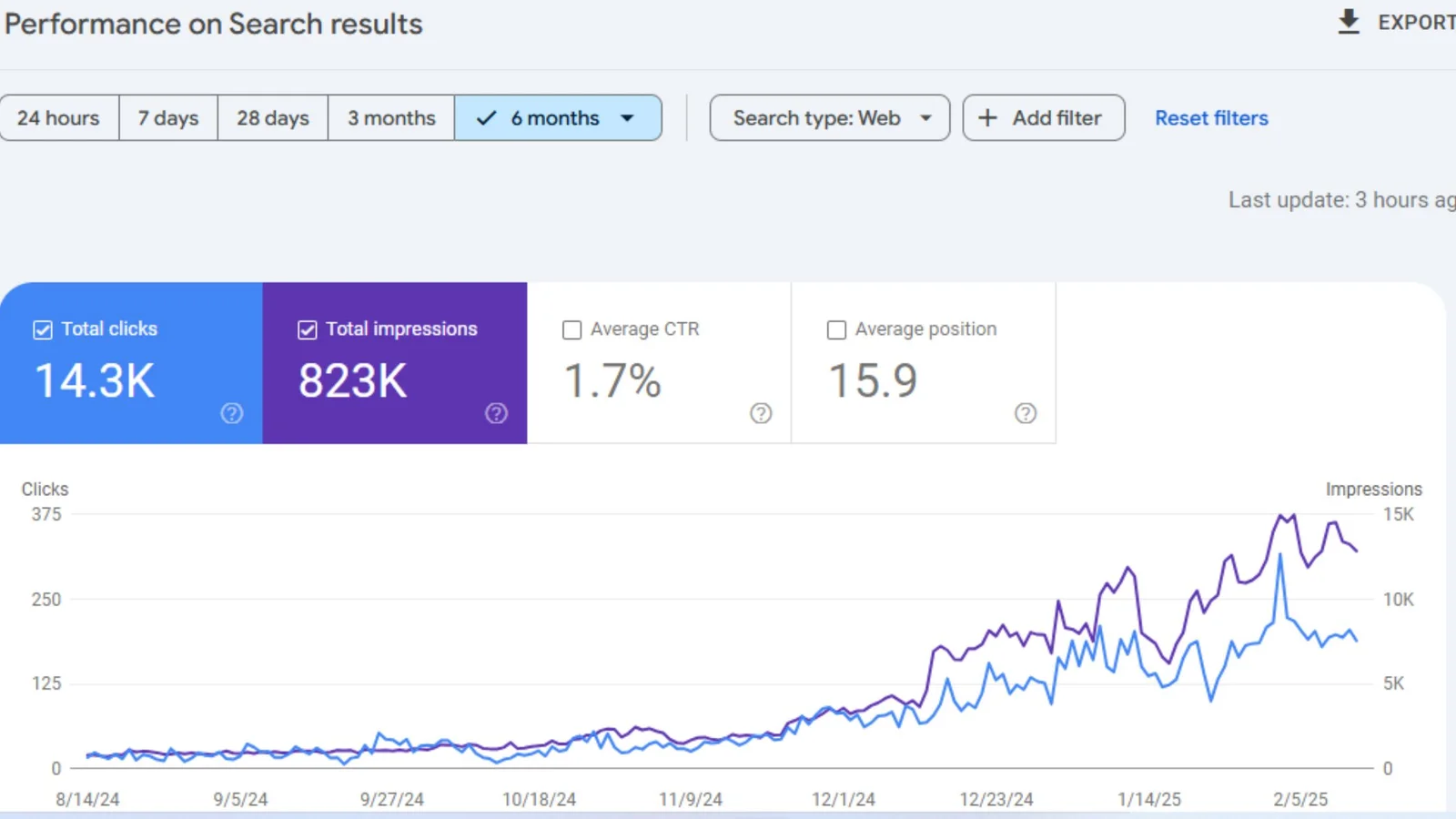
At BeSky Marketing, we have seen this approach work in practice. In one footwear SEO campaign, an Indian D2C footwear brand started with almost no organic visibility and significant technical and content problems. After addressing technical SEO, keyword targeting, category architecture, product pages, content, and authority building, the campaign generated ₹27+ lakh in organic revenue. Read the full footwear SEO case study.
1. Build a Keyword Strategy Around How Customers Shop
Effective SEO for footwear brands starts with understanding what potential customers actually search for.
Instead of targeting only broad terms such as “shoes,” build keyword groups around:
- Product type: running shoes, sneakers, loafers, sandals
- Customer: men’s shoes, women’s shoes, kids’ footwear
- Use case: walking shoes, office shoes, gym shoes
- Features: lightweight, waterproof, breathable, slip-resistant
- Price: shoes under ₹1,500, affordable running shoes
- Problems and needs: comfortable shoes for daily walking, wide-fit shoes
- Commercial searches: best running shoes, best sneakers for daily use
The goal is to match each search intent with the right page.
A transactional keyword may belong on a product or category page, while a question such as “How should running shoes fit?” is better suited to an educational article.
2. Create an E-commerce Site Structure That Supports SEO
A footwear website can quickly become complicated because of sizes, colours, styles, collections, filters, and product variants.
Your site architecture should make it clear which pages are most important.
For example:
Running Shoes → Men’s Running Shoes → Specific Product
and
Casual Footwear → Women’s Casual Sneakers → Specific Product
Category pages should target meaningful commercial searches, while product pages should provide detailed information about individual products.
Google’s ecommerce guidance recommends using clear navigation and internal linking to help search engines understand the structure and importance of ecommerce content.
3. Optimize Product and Category Pages
A product page should do much more than contain a product name and price.
For footwear products, provide useful information about:
- Materials
- Size and fit
- Available colours
- Product features
- Intended use
- Care instructions
- Shipping and returns
- Customer reviews
- Original product photography
- Related products
Avoid copying manufacturer descriptions across multiple products. Original information can help differentiate your pages and give customers more confidence before purchasing.
Technical elements also matter, including descriptive titles, headings, clean URLs, image optimization, canonicalization, and appropriate structured data.
Google’s ecommerce documentation specifically recommends relevant structured data and clear product information to help Google understand ecommerce pages.
4. Build Content Around Real Footwear Questions
Product pages capture buyers who are already close to purchasing. Informational content can reach potential customers earlier.
A footwear brand could create content such as:
- How should running shoes fit?
- Running shoes vs walking shoes
- How to choose the right shoe size
- How to clean white sneakers
- Best shoes for daily walking
- How often should running shoes be replaced?
- Leather vs synthetic footwear: Which is better?
The important point is not to publish articles simply because a keyword has search volume.
Create content that demonstrates genuine expertise, answers the question thoroughly, and helps the reader make a better decision.
Google’s current guidance for AI search also emphasizes unique, useful, trustworthy content rather than generic information that could easily be produced by anyone.

5. Fix Technical SEO Before Scaling Content
Footwear ecommerce websites commonly face technical challenges caused by filters, variants, duplicate URLs, discontinued products, and thin pages.
A technical SEO audit should review:
- Crawlability and indexation
- XML sitemap
- Robots.txt
- Canonical URLs
- Duplicate pages
- Broken links
- Page speed and mobile experience
- Product structured data
- Internal linking
- Out-of-stock and discontinued products
This matters because publishing more content will not solve a website architecture problem.
In our footwear SEO case study, technical issues included duplicate product URLs, missing canonical tags, thin product descriptions, missing structured data, slow mobile performance, and an absent XML sitemap. Fixing these issues was part of the foundation before scaling content and authority.
6. Build Authority Beyond Your Website
Strong content alone may not be enough to compete in a competitive footwear market.
A footwear brand can build authority through relevant digital PR, product reviews, industry publications, fashion websites, fitness publications, expert interviews, partnerships, and genuinely useful research.
The objective is not to acquire hundreds of random backlinks.
It is to build relevant authority and strengthen the brand’s credibility within its market.
7. Optimize for Search and AI-Generated Experiences
Search is evolving, but the fundamentals remain important.
Rather than chasing separate “GEO hacks” or trying to create content specifically for an AI system, focus on making your website easy to understand, trustworthy, technically sound, and genuinely useful.
Google’s current guidance says established SEO practices remain important for its generative AI search experiences and encourages site owners to focus on unique, helpful content and clear technical structure.
For footwear brands, this means providing clear product information, original insights, expert guidance, strong internal linking, and trustworthy brand information.
8. Measure SEO by Revenue, Not Rankings Alone
A footwear SEO campaign should ultimately connect organic visibility with business outcomes.
Track:
- Organic clicks and impressions
- Non-brand keyword growth
- Category and product rankings
- Organic conversions
- Revenue from organic search
- Conversion rate
- Top-performing landing pages
- Indexed pages
- Backlinks
- Search Console trends
If a page gains impressions but few clicks, improve the title and search snippet. If it receives traffic but does not convert, investigate product information, pricing, trust signals, user experience, and calls to action.
SEO should help sell more footwear – not simply produce a larger ranking report.
Why Choose BeSky Marketing for Footwear SEO?
BeSky Marketing combines technical SEO, e-commerce optimization, content strategy, link building, and data-driven marketing to help businesses grow through organic search.
Our experience includes a dedicated footwear SEO campaign that generated ₹27+ lakh in organic revenue, giving us practical experience with the technical, content, keyword, and authority challenges footwear ecommerce businesses face.
If you are launching or scaling a footwear brand, the right SEO strategy can help you compete for the searches that matter most-and turn organic visibility into sustainable revenue.
Want to grow your footwear brand through organic search? Contact BeSky Marketing to discuss your SEO goals.
FAQs
1. What is SEO for footwear brands?
SEO for footwear brands is the process of improving a footwear website so it can appear in relevant organic search results. It includes keyword research, category and product-page optimization, technical SEO, content creation, internal linking, structured data, and authority building.
2. How can a new footwear brand get traffic from Google?
A new footwear brand can build organic traffic by targeting relevant long-tail and commercial keywords, creating optimized category and product pages, publishing helpful footwear content, improving technical SEO, building internal links, and earning relevant backlinks and brand mentions.
3. What keywords should a footwear brand target?
A footwear brand should target keywords based on product type, customer needs, features, use cases, and buying intent. Examples include “running shoes for beginners,” “comfortable walking shoes,” “women’s casual sneakers,” and “buy men’s formal shoes online.” Keyword selection should be based on relevance, competition, search intent, and business value rather than search volume alone.
4. How long does footwear SEO take to show results?
SEO timelines vary depending on website authority, competition, technical health, content quality, and consistency. New footwear brands may begin seeing improvements in impressions and rankings within a few months, while generating significant and consistent organic traffic can take longer. SEO should be evaluated through both visibility and business metrics such as conversions and organic revenue.
5. Why should a footwear brand hire an e-commerce SEO agency?
An e-commerce SEO agency can help a footwear brand develop a strategy covering keyword research, site architecture, technical SEO, category and product-page optimization, content, internal linking, and authority building. An experienced agency can also use search and conversion data to prioritize SEO opportunities that have the potential to contribute to organic revenue.
