
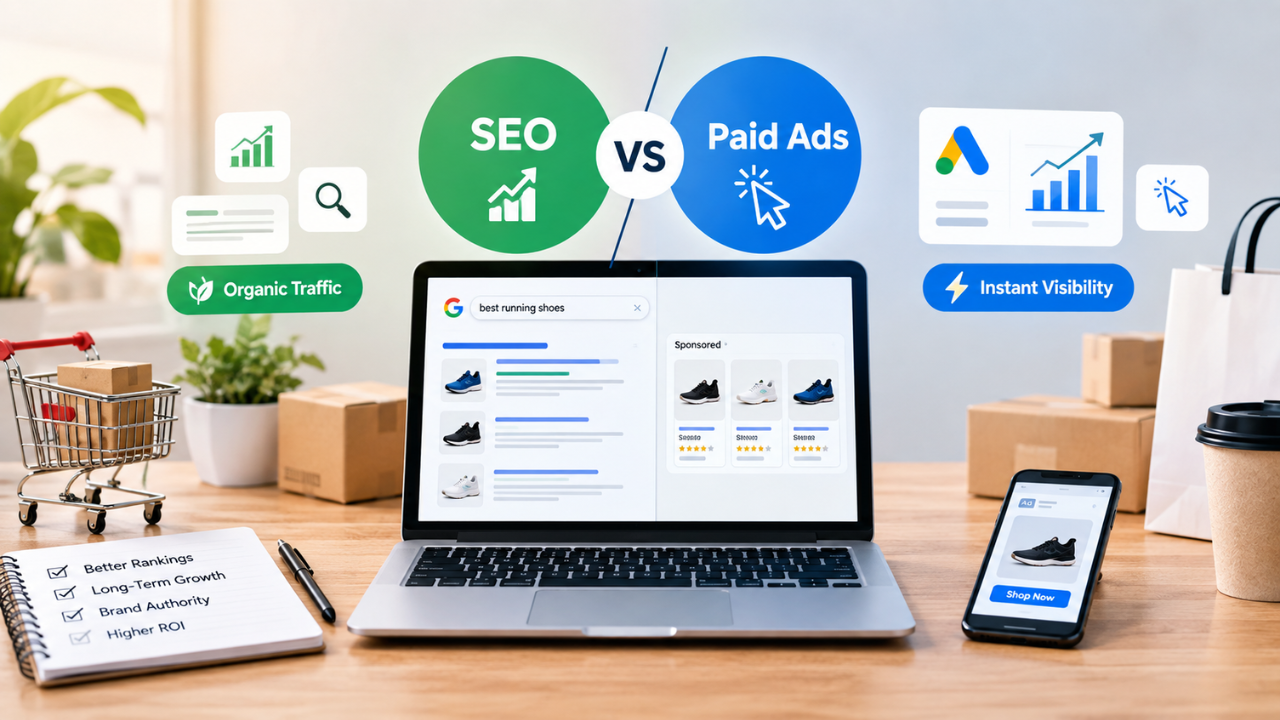
For eCommerce brands, getting consistent traffic and converting visitors into customers is essential for online growth. Two of the most common ways to attract customers are SEO vs Paid Ads for eCommerce. But which one should an eCommerce business prioritize?
The answer depends on your goals, budget, competition, and growth stage. SEO is generally better for building sustainable, long-term organic visibility, while paid ads can deliver faster traffic and immediate opportunities. For many eCommerce brands, combining both strategies creates the strongest overall marketing approach.
What Is SEO for eCommerce?
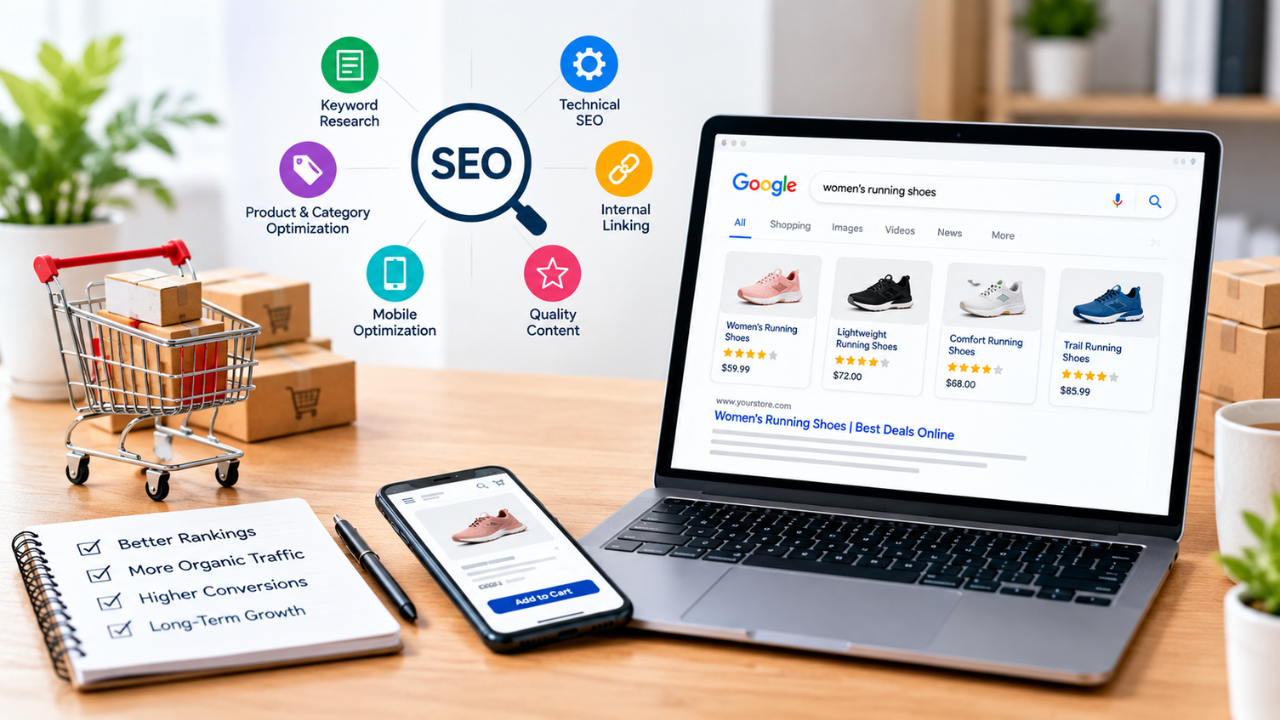
eCommerce SEO involves optimizing an online store so that its products, categories, and useful content can appear prominently in organic search results.
The goal is to attract people who are actively searching for products or information related to your business. Unlike paid campaigns, organic traffic does not require paying for every click.
An effective SEO strategy may include:
- Optimizing product and category pages
- Researching relevant keywords and search intent
- Improving website speed and mobile usability
- Strengthening internal linking
- Creating helpful and relevant content
- Implementing structured data
- Building website authority through quality backlinks
For SEO for eCommerce brands, consistency is important. Rankings generally take time to develop, but successful optimization can continue generating traffic after the initial work has been completed.
What Are Paid Ads for eCommerce?
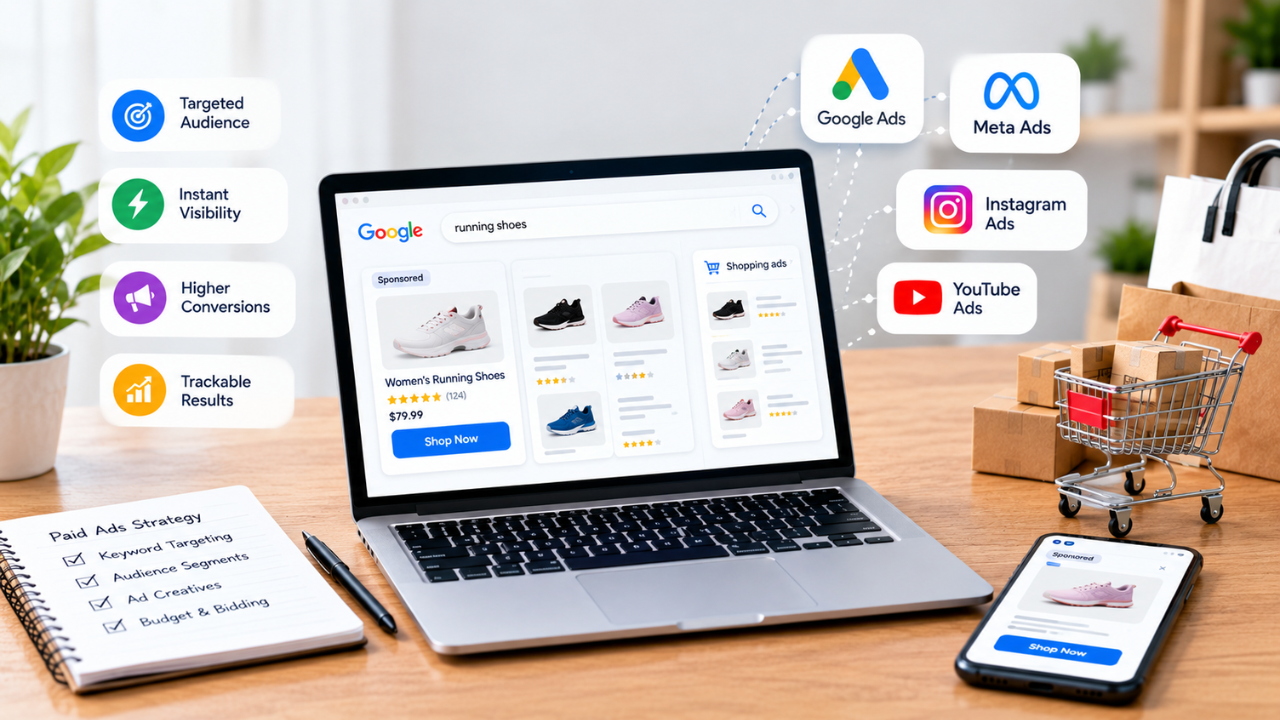
Paid ads for eCommerce allow businesses to promote products directly to potential customers through platforms such as Google Ads and social media advertising networks.
With eCommerce paid advertising, brands can target audiences based on factors such as search queries, interests, demographics, shopping behavior, and previous website interactions.
Paid advertising can be especially useful for:
- New product launches
- Seasonal sales
- Limited-time offers
- Retargeting campaigns
- Testing new products
- Generating immediate website traffic
The major advantage is speed. A well-structured campaign can begin attracting visitors shortly after it goes live. However, traffic generally depends on continued advertising investment.
SEO vs Paid Ads for eCommerce : Key Differences
When comparing SEO vs PPC, neither strategy is universally better. They serve different purposes.
SEO focuses on building organic visibility over time, while PPC provides immediate opportunities to reach potential customers.
| Factor | SEO | Paid Ads |
| Traffic Speed | Gradual Growth | Instant Traffic |
| Long-Term Value | Sustainable Growth | Ongoing Investment |
| Initial Investment | Time & Resources | Ad Budget |
| Testing Speed | Slower Testing | Faster Testing |
| Brand Visibility | Builds Authority | Immediate Visibility |
| Best Use | Long-Term Growth | Quick Results |
This is why the decision should be based on your business objectives rather than simply choosing the cheaper option.
Why Start With Paid Ads for eCommerce?
When an eCommerce store is new, it usually has little or no organic visibility. Even if the website is properly optimized, eCommerce SEO takes time to build rankings and attract consistent organic traffic.
This is where paid ads for eCommerce can be useful.
With PPC campaigns, brands can start reaching potential customers much faster. Platforms such as Google Ads allow businesses to promote products to users who are actively searching for relevant products.
Paid campaigns can help a new brand:
- Generate initial website traffic
- Test products and offers
- Understand customer demand
- Identify high-performing audiences
- Collect conversion data
- Determine a realistic customer acquisition cost
This information is valuable because it helps the business understand what actually works before making larger long-term marketing investments.
When Should SEO Be Started?
SEO should not be ignored simply because paid advertising is being used.
Once the business has established a stable advertising budget, understands its key products, and has some data about customer behavior, it is a good time to begin investing seriously in SEO.
Starting SEO for eCommerce brands at this stage allows the business to work toward long-term organic visibility while PPC continues generating immediate traffic.
SEO can focus on:
- Product and category page optimization
- Keyword and search-intent research
- Technical SEO
- Internal linking
- Helpful content
- Mobile optimization
- Website speed
- Product schema and structured data
- Authority and link building
Because SEO takes time, starting it early alongside paid campaigns means the organic channel can mature while the business continues using PPC for immediate growth.
When Should eCommerce Brands Prioritize SEO?
Brands should prioritize SEO when their primary goal is long-term organic growth.
For example, an online fashion, beauty, footwear, or home-products store may have hundreds of products and categories. Optimizing these pages can help the brand capture different stages of the customer journey.
SEO can also help reduce dependence on paid traffic over time. Strong rankings for commercially valuable searches can provide a continuous source of potential customers without paying for each individual visit.
However, businesses should have realistic expectations. SEO is not an overnight solution, particularly for new websites or highly competitive industries.
Our Approach at Besky Marketing
At Besky Marketing, we have worked on 100+ eCommerce websites, helping brands improve both paid and organic visibility. Based on this experience, we believe SEO and paid ads work best when managed together.
For new eCommerce brands, we recommend starting with paid ads to generate initial traffic, test products, and understand customer demand. Once the advertising budget and campaigns become stable, SEO should be started alongside paid ads to build long-term organic visibility.
Our approach focuses on:
- Running paid ads for immediate traffic and sales
- Building SEO alongside ads for long-term growth
- Using PPC data to identify valuable keywords and products
- Optimizing product and category pages
- Creating content based on customer search intent
- Tracking traffic, conversions, revenue, and ROI
- Continuously improving both channels based on performance
The goal is simple: use paid ads for faster results while SEO builds sustainable organic traffic, allowing both channels to support eCommerce growth together.
Conclusion
SEO and paid ads serve different purposes, and eCommerce brands don’t necessarily have to choose between them. Paid advertising can provide speed, testing opportunities, and immediate visibility, while SEO can build sustainable organic traffic and stronger search visibility over time.
For long-term growth, eCommerce brands should treat SEO as an ongoing investment while using paid advertising strategically for campaigns, launches, promotions, and testing. A balanced approach can help businesses capture both immediate opportunities and future organic demand.
Besky Marketing can help eCommerce brands develop a search-focused strategy that combines sustainable visibility with performance-driven digital marketing, based on their specific growth objectives.
FAQs
Is SEO better than paid ads for eCommerce?
SEO can be better for sustainable, long-term traffic, while paid ads are better when a brand needs immediate visibility. Many eCommerce businesses benefit from using both.
How long does eCommerce SEO take to show results?
SEO timelines vary depending on competition, website authority, technical health, content quality, and other factors. New websites generally need more time to establish organic visibility.
Are paid ads necessary for a new eCommerce store?
Not always. However, paid ads can help a new store generate initial traffic and test products while its organic search presence develops.
Can SEO reduce paid advertising costs?
Over time, strong organic visibility may reduce a brand’s dependence on paid traffic for some searches. However, SEO does not necessarily replace paid advertising completely.
What should an eCommerce brand prioritize first?
If immediate sales or testing is the main goal, paid ads may deserve greater attention. If sustainable traffic and long-term visibility are the priority, SEO should receive strong investment.
