
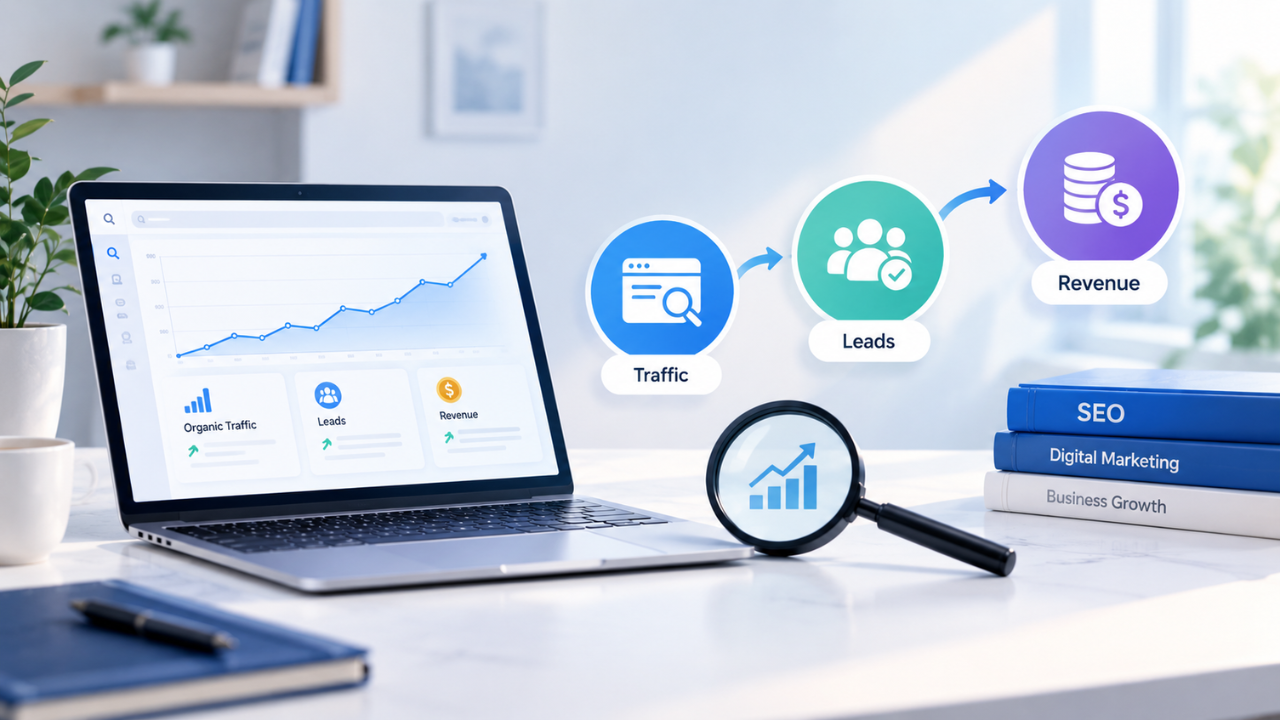
SEO success is not measured by rankings or traffic alone. Businesses need to understand whether their SEO efforts are attracting the right visitors, generating qualified leads, and contributing to revenue. This is why tracking the right SEO metrics for businesses is essential for measuring real performance and making informed marketing decisions.
Organic traffic can show whether a website is gaining visibility in search, but traffic is only one part of the picture. By connecting traffic, conversions, leads, and revenue, businesses can better understand how SEO contributes to their overall growth.
Why Businesses Should Measure More Than Just Traffic
Organic traffic is an important SEO performance metric, but more traffic does not always mean better business results. A website may attract thousands of visitors yet generate very few qualified enquiries or sales.
That’s why businesses should track multiple SEO performance metrics to understand what happens after users reach their website. Traffic, engagement, conversions, lead quality, and revenue should be evaluated together rather than in isolation.
1. Measure Organic Traffic
Organic traffic helps businesses understand whether their website is gaining visibility in search engines and attracting relevant visitors.
Businesses can monitor:
- Organic users and sessions
- Search impressions and clicks
- Landing-page performance
- Traffic from important search queries
- New and returning organic visitors
However, the goal should not simply be to increase traffic. Relevant visitors who match your target audience and search intent are more valuable than traffic that does not contribute to business objectives.
2. Track SEO Leads and Conversions
For service businesses and B2B companies, SEO leads can be more important than total website traffic.
Useful conversion actions include:
- Contact-form submissions
- Phone calls
- Consultation requests
- Quote requests
- Demo requests
- WhatsApp enquiries
Businesses should also monitor lead quality. Effective Lead Generation is not only about increasing the number of enquiries; it is about attracting potential customers who have a genuine interest in the products or services offered.
3. Measure Revenue From SEO
Revenue helps businesses connect SEO activity with commercial outcomes. For example, an eCommerce SEO case study can show how organic search contributes to measurable revenue.
Businesses can track:
- Organic transactions
- Organic revenue
- Conversion rate
- Revenue per visitor
- Revenue-generating landing pages
- Assisted conversions
Revenue attribution can be complex because customers may interact with several Digital Marketing channels before making a purchase. Therefore, businesses should use a consistent attribution approach when evaluating SEO’s contribution.
4. Connect Traffic, Leads, and Revenue
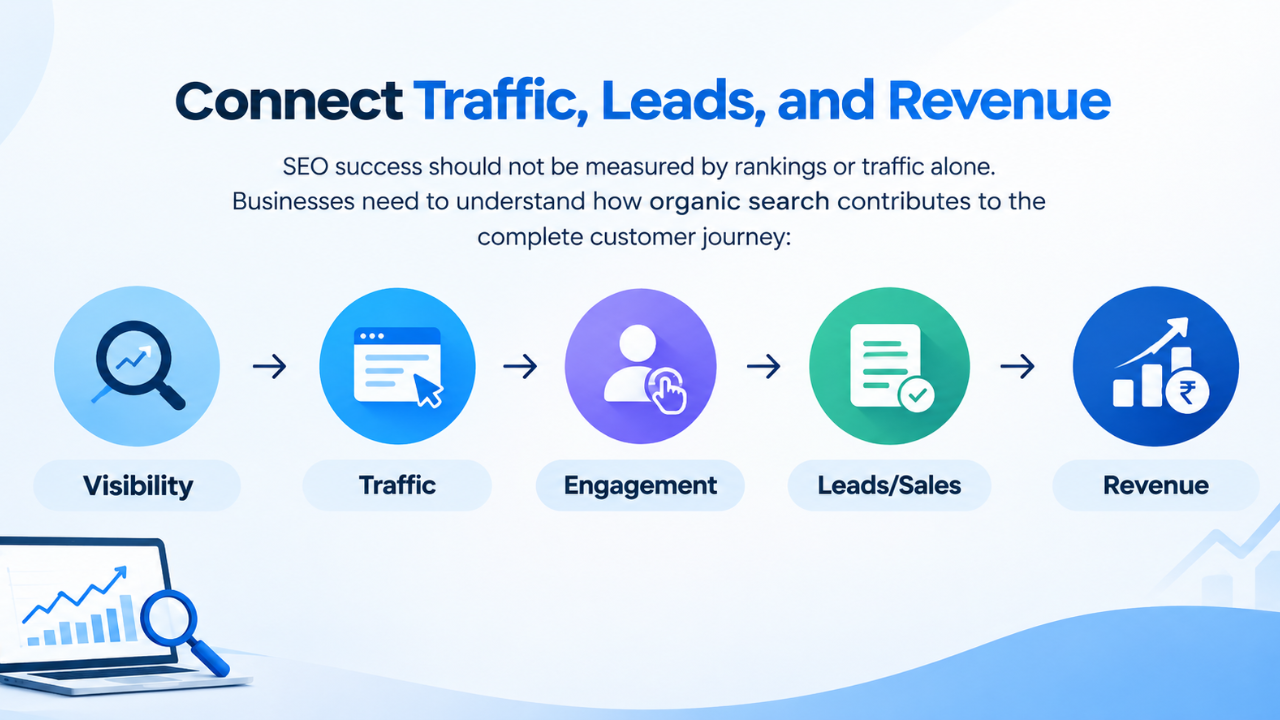
The most useful approach is to connect SEO metrics across the entire customer journey.
Visibility → Traffic → Engagement → Leads/Sales → Revenue
For example, growing organic traffic is valuable, but businesses should also evaluate whether that traffic is engaging with the website, generating qualified leads or sales, and contributing to revenue.
At BeSky Marketing, SEO measurement can be aligned with business objectives instead of treating rankings or traffic as the final goal. This approach helps businesses focus on measurable outcomes and make more informed decisions about their SEO strategy.
5. Choose Metrics Based on Your Business Model
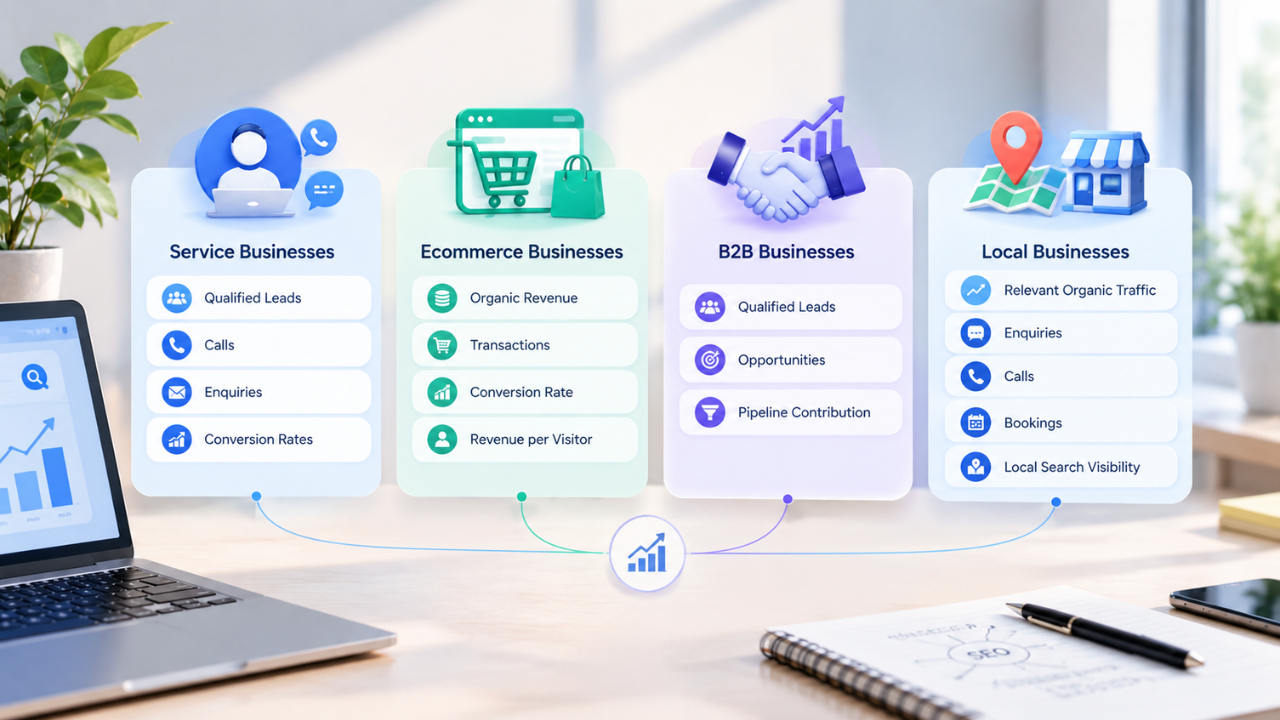
Different businesses may need different KPIs.
- Service businesses: Track qualified leads, calls, enquiries, and conversion rates.
- Ecommerce businesses: Monitor organic revenue, transactions, conversion rate, and revenue per visitor.
- B2B businesses: Measure qualified leads, opportunities, and pipeline contribution.
- Local businesses: Track relevant organic traffic, enquiries, calls, bookings, and local search visibility.
This makes it important to select SEO performance metrics according to your business model and objectives.
Why Traffic Alone Is Not Enough
According to Search Engine Journal’s State of Search 2027, 39% of surveyed search professionals reported that traffic declined or stayed flat while leads and conversions held or improved. This shows why businesses should not measure SEO success through traffic alone. State of Search 2027 report
Businesses should also track qualified leads, conversions, pipeline, and revenue to understand whether SEO is generating real business value.
Should Businesses Measure Traffic, Leads, or Revenue?
Businesses should measure all three because each metric shows a different stage of SEO performance.
Traffic shows whether SEO is attracting visitors, while leads and conversions indicate whether those visitors are taking valuable actions. Revenue connects SEO performance to measurable business outcomes.
A practical SEO measurement framework can include:
- Visibility: Impressions, rankings, and clicks
- Traffic: Organic users and sessions
- Conversions: Leads, enquiries, and purchases
- Business value: Revenue, conversion value, and ROI
Rather than focusing on a single SEO metric, businesses should evaluate these metrics together to understand how organic search contributes to meaningful business growth.
Conclusion
The right SEO metrics for businesses depend on their goals, customer journey, and business model. Organic traffic is useful for measuring reach, SEO leads help measure demand, and revenue shows the commercial value of organic search.
By tracking these metrics together, businesses can understand what is working, identify areas for improvement, and make better decisions about future SEO investment.
FAQs
1. What are the most important SEO metrics for businesses?
The most important SEO metrics for businesses include organic traffic, search visibility, leads, conversions, conversion rate, organic revenue, and ROI. The right metrics depend on the business model and its goals.
2. Is organic traffic enough to measure SEO performance?
No. Organic traffic shows how many visitors SEO attracts, but it does not indicate whether those visitors become leads or customers. Businesses should also track conversions, lead quality, revenue, and other business outcomes.
3. How can businesses measure leads generated from SEO?
Businesses can measure SEO leads by tracking actions such as contact-form submissions, phone calls, consultation requests, quote requests, demo requests, and other relevant enquiries originating from organic search.
4. How do you measure SEO revenue?
SEO revenue can be measured by tracking organic transactions, revenue from organic search, conversion rates, revenue per visitor, and revenue-generating landing pages. Businesses should also use a consistent attribution model when multiple marketing channels influence a purchase.
5. Which SEO metrics should an ecommerce business track?
Ecommerce businesses should monitor organic traffic, product-page performance, organic transactions, conversion rate, organic revenue, revenue per visitor, and revenue from key landing pages. These metrics help connect SEO activity with sales and revenue.
