
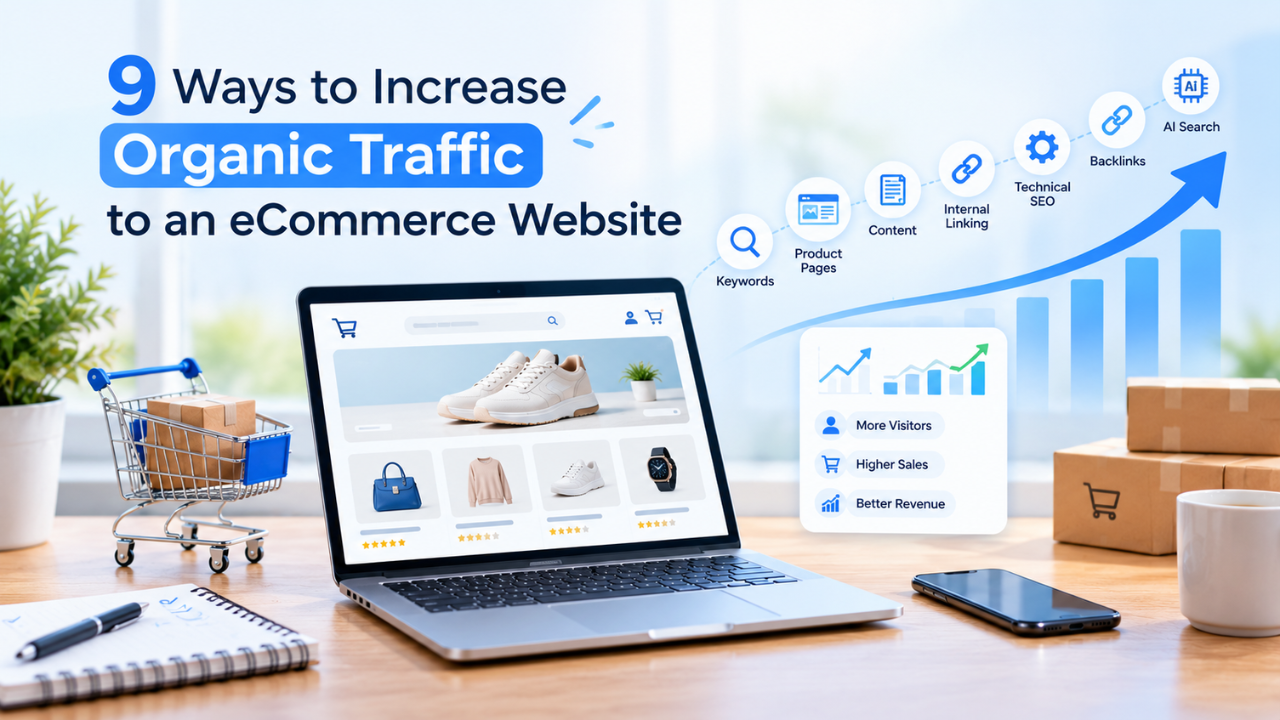
If you want to increase organic traffic to an eCommerce website, the goal is simple: show up when shoppers search for products like yours. Do this consistently, and you depend less on paid advertising. At BeSky Marketing, we work on SEO strategies that connect search visibility with traffic, leads and revenue. Our approach includes keyword research, technical SEO, content optimization, internal linking, and competitor analysis.
The key is not simply to rank for more keywords. To increase organic traffic to an eCommerce website, your website needs to appear for relevant searches, provide useful information, and make it easy for visitors to find and buy the right products.
1. Target Keywords Based on Search Intent
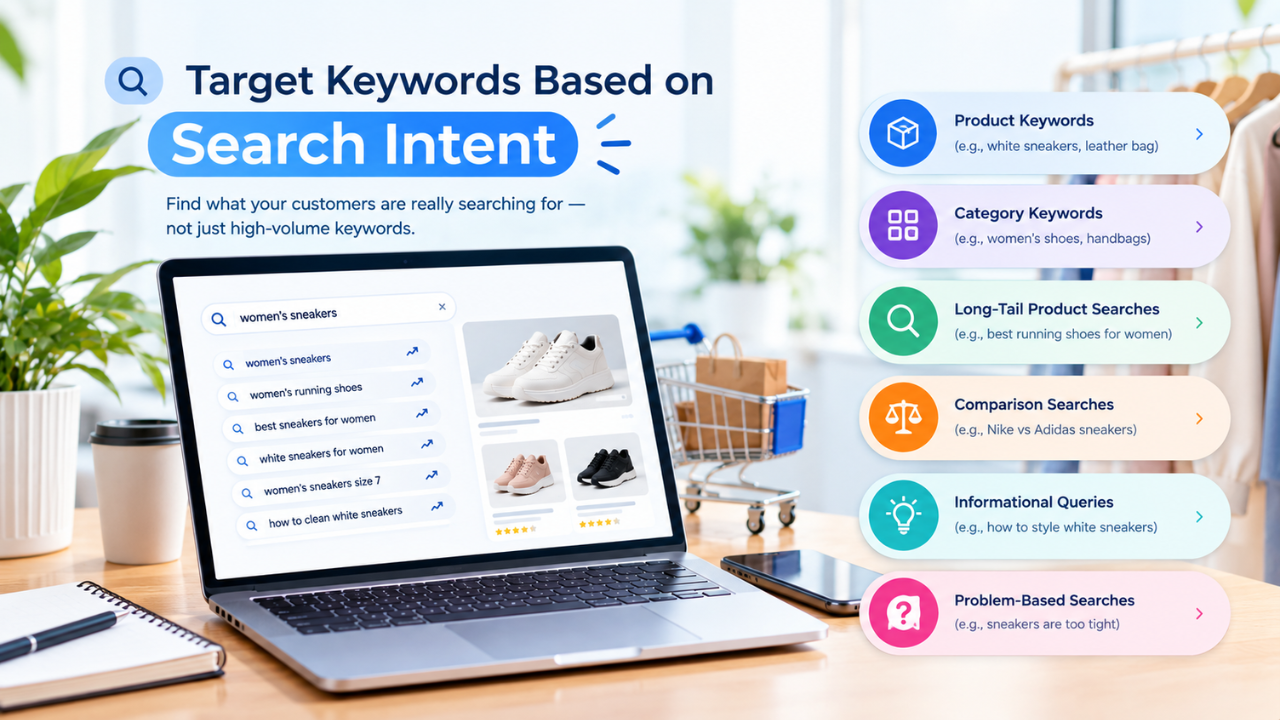
Start with keyword research, but do not focus only on high-volume keywords. Identify terms that match what potential customers are actually looking for.
For example, an online fashion store could target:
- Product keywords
- Category keywords
- Long-tail product searches
- Comparison searches
- Informational queries
- Problem-based searches
Map keywords to the right pages instead of using the same keyword across multiple URLs. A product keyword should generally lead to a relevant product page, while broader category terms can be targeted through collection or category pages.
This helps search engines understand the purpose of each page and gives users a more relevant landing page.
2. Optimize Product and Category Pages
Product and category pages are important organic landing pages for an eCommerce website. Make sure each page has a clear title, useful description, descriptive headings, relevant internal links, and unique content.
Product pages should clearly explain important information such as features, materials, sizes, availability, pricing and shipping details where applicable.
Google also supports structured data for product pages, which can help eligible products appear with additional information in search results.
Avoid copying manufacturer descriptions across products. Write useful, original information that helps shoppers understand the product.
3. Create Helpful Content Around Your Products
Blog content can help an eCommerce website reach customers before they are ready to purchase.
Instead of publishing articles only to insert keywords, answer questions your target customers commonly ask.
For example, a footwear store could create content around:
- How to choose footwear for different occasions
- How to clean specific footwear materials
- What shoes to wear with different outfits
- How to choose the right shoe size
This type of content can capture informational searches and introduce potential customers to your products.
Google’s guidance emphasizes useful, reliable, people-first content rather than content created primarily to manipulate search rankings.
4. Build a Strong Internal Linking Structure
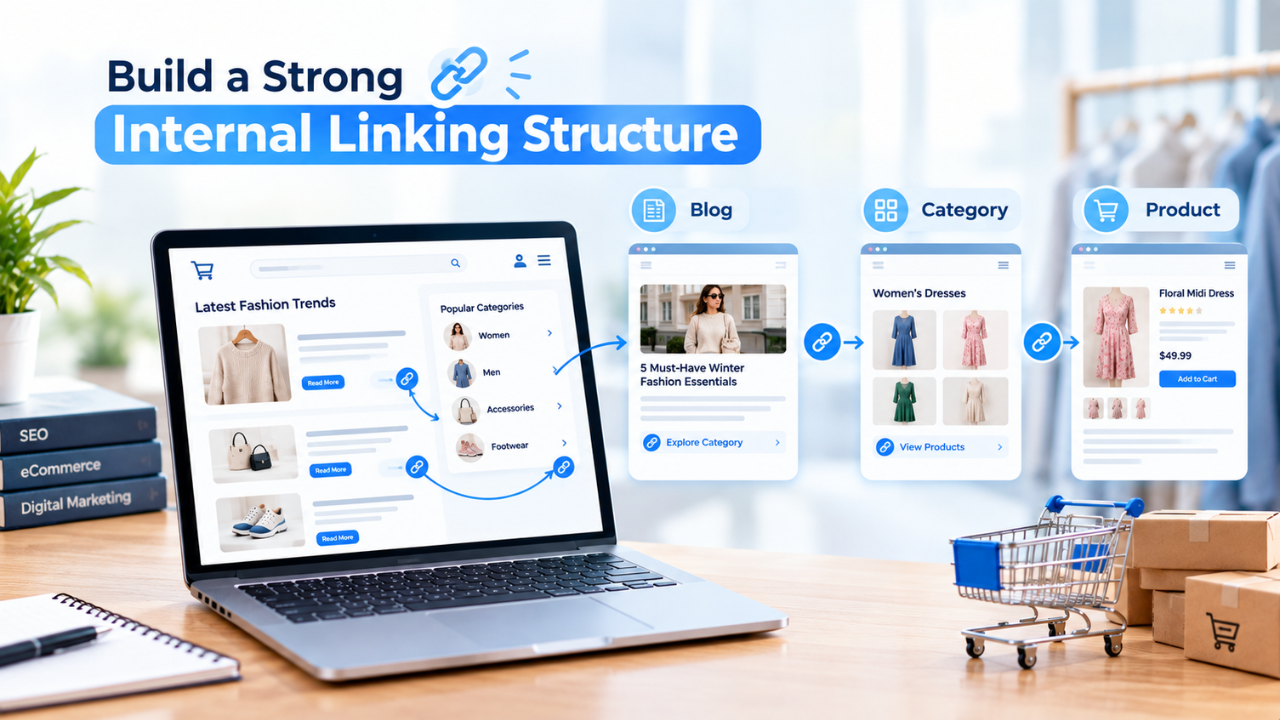
Internal links help users move between related pages and help search engines understand the relationship between different pages on your website.
For an eCommerce site, you can link:
Blog → Category → Product
For example, a blog about choosing wedding footwear could link to a relevant footwear category, which can then link to individual products.
Use descriptive anchor text that tells users what they will find after clicking. BeSky also includes contextual internal linking as part of its SEO implementation process.
5. Fix Technical SEO Problems
Technical problems can prevent search engines from efficiently crawling, indexing and understanding your website.
Regularly check:
- Indexing issues
- Broken links
- Duplicate URLs
- Canonical tags
- XML sitemap
- Robots.txt
- Mobile usability
- Redirects
- Page speed
- JavaScript-related issues
Large eCommerce websites need particular attention because filters, sorting parameters and product variations can create many URLs.
Use Google Search Console and a technical crawling tool to identify problems and prioritize fixes based on their potential impact.
6. Improve Website Speed and Mobile Experience
A slow or difficult-to-use website can create problems for both users and your business.
Check your Core Web Vitals, mobile experience, image sizes, unnecessary scripts and page-loading performance. Compress product images without reducing their useful quality and review third-party apps or scripts that may slow down important pages.
Google states that Core Web Vitals are part of its ranking systems, while also making clear that good scores alone do not guarantee high rankings.
The goal should be a fast, accessible and easy-to-use shopping experience.
7. Optimize Images for Search
eCommerce websites usually contain many product images, making image optimization important.
Use descriptive image file names and relevant alt text that accurately describes the image. Compress images and use suitable dimensions to reduce unnecessary page weight.
For example, instead of:
IMG_1234.jpg
use something descriptive such as:
black-leather-womens-sling-bag.jpg
Do not add keywords to alt text when they do not describe the image. Accessibility and accurate image descriptions should come first.
8. Use Product Reviews and First-Hand Information
Reviews can provide useful information that helps shoppers make purchasing decisions. Encourage genuine customers to share their experiences and make relevant product details easy to find.
You can also add first-hand information such as product testing, sizing guidance, material details, care instructions and original photographs where appropriate.
This supports the trust and experience aspects of useful eCommerce content. If review structured data is used, it must accurately represent eligible reviews and follow Google’s structured data guidelines.
9. Measure Organic Traffic and Revenue, Not Just Rankings
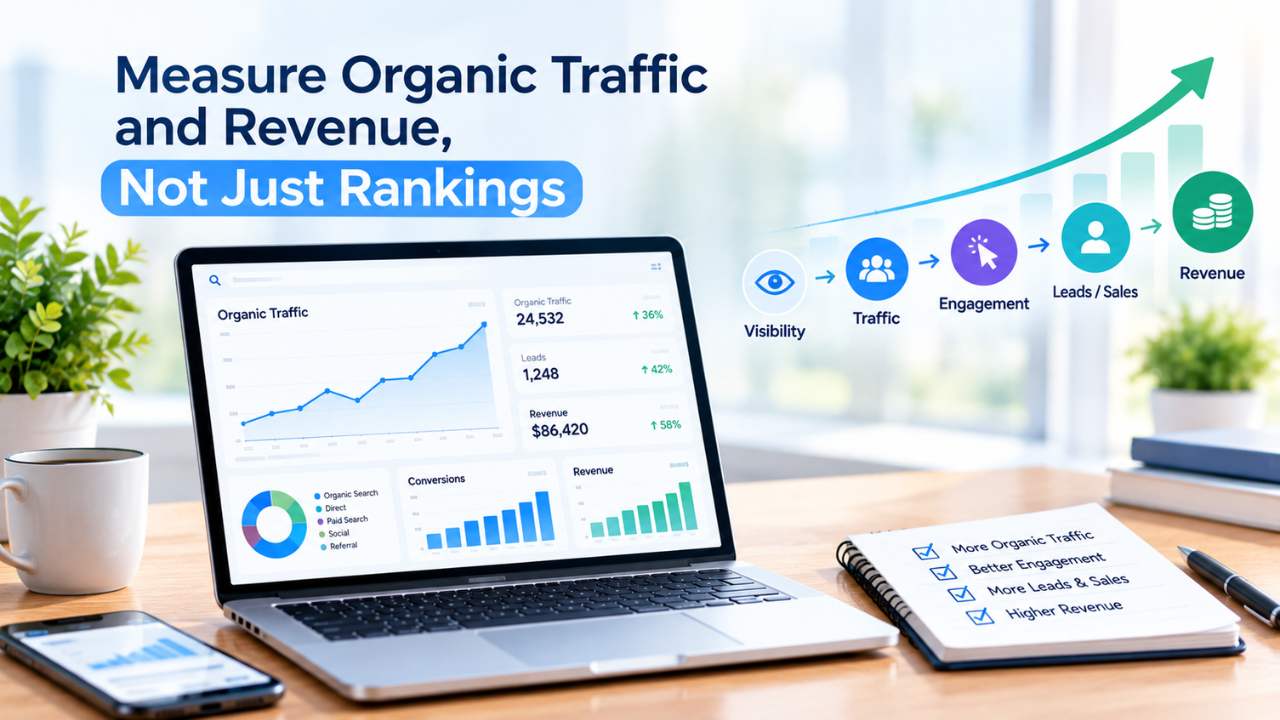
SEO success should not be measured by keyword positions alone.
Track metrics such as:
- Organic clicks and impressions
- Organic landing pages
- Conversion rate
- Revenue from organic search
- Product-level performance
- Non-brand organic traffic
- Assisted conversions
- Search queries generating traffic
Google Search Console can help you understand how your pages perform in Google Search, while analytics data can help connect organic visits with business outcomes.
BeSky’s case-study portfolio includes eCommerce SEO projects across categories such as jewellery, footwear, pet supplements and Shopify stores, showing why performance should be evaluated through business-focused metrics rather than rankings alone.
Final Thoughts
Increasing organic traffic to an eCommerce website requires more than adding keywords to product pages. A sustainable strategy combines search-intent-based keyword research, strong category and product pages, useful content, internal linking, technical SEO, image optimization and continuous performance tracking.
Start with the pages and technical issues that can have the biggest impact, then build content around the questions your customers are searching for. Over time, this approach can help your website attract more relevant visitors and create more opportunities for sales.
For businesses looking for a structured approach, BeSky Marketing’s SEO Services cover areas including competitor analysis, SEO audits, keyword research, on-page SEO, content optimization, internal linking and structured data. You can also explore BeSky Marketing’s eCommerce SEO solutions and its SEO case studies to see examples of its work.
FAQs
How can I increase organic traffic to my eCommerce website?
Focus on search intent, product and category optimization, technical SEO, internal linking, helpful content, mobile usability, and continuous performance analysis.
Does SEO work for eCommerce websites?
Yes. SEO can help eCommerce websites improve their visibility for relevant product, category, and informational searches when pages are useful, accessible, and aligned with user intent.
How long does it take to increase organic traffic?
There is no fixed timeframe. Results depend on factors such as website condition, competition, content quality, technical health, authority, and the consistency of SEO work.
Should I focus on product pages or category pages?
Both can be important. Category pages can target broader commercial searches, while product pages can target specific product-related searches. Their roles should be defined according to search intent.
Is AEO different from SEO?
AEO focuses on making information easy for answer-oriented search experiences to understand and surface. Google says its AI Search features still rely on foundational SEO practices, so strong technical SEO and helpful content remain important.
How can BeSky Marketing help an eCommerce website?
BeSky Marketing provides eCommerce SEO and broader digital marketing services focused on organic visibility, traffic generation, and business growth.
