
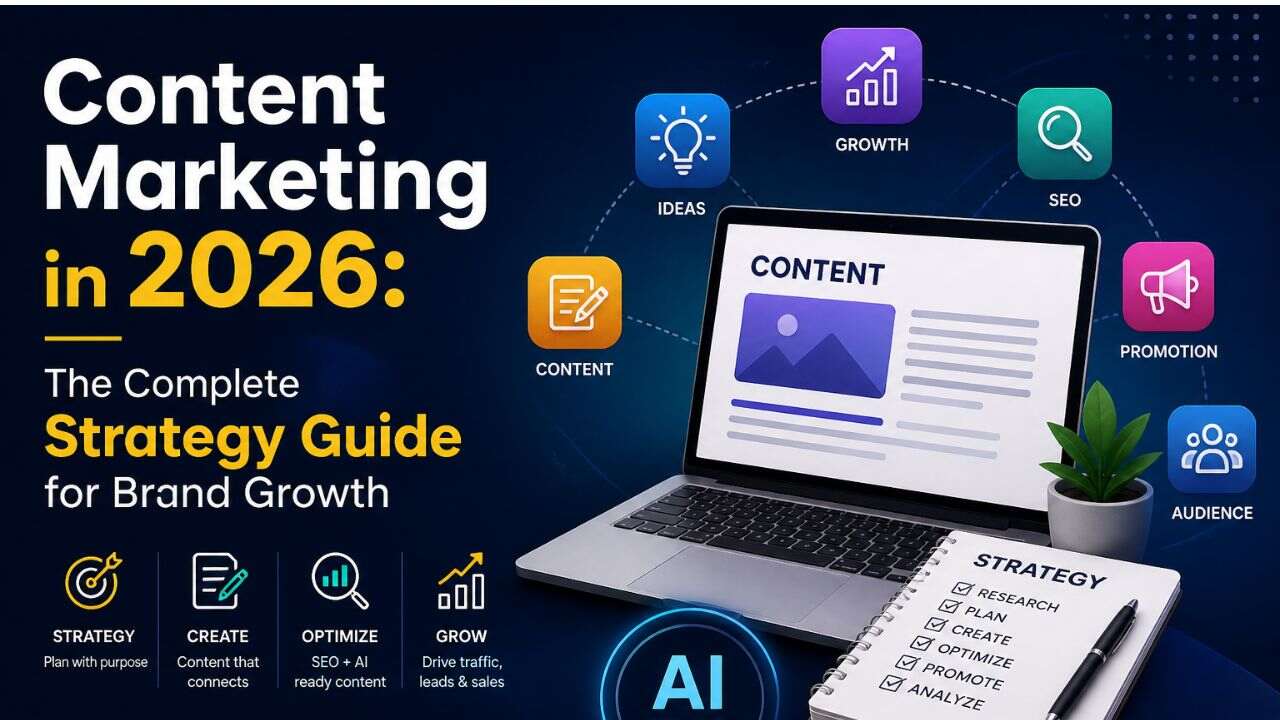
Content marketing gets talked about like it’s optional.
Post some blogs. Maybe make a video. Build a following. Nice to have, but not essential.
That framing is exactly wrong -and businesses that treat content as an afterthought are paying for it in organic rankings, brand authority, and customer acquisition costs they don’t need to carry.
In 2026, content marketing is the core of how brands get discovered. Not just through Google. Through AI Overviews that cite authoritative sources. Through People Also Ask boxes. Through the brand recall that comes from being genuinely helpful to someone before they’ve decided to buy.
This content marketing strategy 2026 guide covers how to build a system that compounds over time -not just how to publish more posts.
Why Content Marketing Works Differently in 2026
The fundamentals haven’t changed. Helpful content still earns trust. Trust still drives purchase decisions.
What’s changed is the infrastructure around it.
Google’s AI Overviews now answer many informational queries directly on the search results page -pulling from the most credible, well-structured sources. Brands whose content is cited in AI Overviews gain brand visibility without requiring a click. Brands whose content isn’t cited are increasingly invisible for a growing category of searches.
AI search engines like Perplexity and Claude are being used for research that previously drove search traffic. These systems cite their sources. If your content is genuinely authoritative and well-structured, it gets cited. If it’s thin or generic, it doesn’t exist in that landscape.
The practical implication: in 2026, content quality and content structure are not separate decisions. Every piece you publish needs to be written for human readers AND structured for AI extraction.
The Content Marketing Framework for 2026
Step 1: Define Your Topical Authority Zone
You can’t be authoritative about everything. And in 2026, topical authority -being recognised by Google and AI systems as a genuinely comprehensive source on a specific subject -is what drives compounding organic results.
Your topical authority zone is the intersection of:
- What your business is genuinely expert in
- What your target audience is actively searching for
- What your competitors haven’t fully covered
For a content marketing guide India context: Indian market context matters here. The topics your audience searches for, the seasonal occasions that drive intent, the regional pricing expectations -these create topical angles that generic global content won’t cover. Owning your Indian market context is often a faster path to authority than competing for globally contested topics.
Step 2: Build a Content Cluster Architecture
Random blog posts don’t build authority. A content cluster architecture does.
Here’s how it works:
One pillar page covers a broad topic comprehensively -your definitive guide to the subject, 2,000–4,000 words, answering every major question a searcher might have about the topic.
Multiple cluster pages go deep on specific subtopics -each targeting a specific keyword, each linking back to the pillar.
Example for a D2C brand:
- Pillar: “The Complete Guide to Sustainable Fashion in India”
- Clusters: “How to Read Fabric Labels,” “Sustainable Brands Under ₹2000,” “Cotton vs Linen for Indian Weather,” “How to Care for Natural Fabrics”
This architecture tells Google your site covers the topic comprehensively -which is what builds topical authority and lifts rankings across the entire cluster, not just individual pages.
Step 3: Map Content to the Full Buyer Journey
Most brands publish content for people who are almost ready to buy. That’s not enough.
The full buyer journey has three stages -and you need content at all three:
Awareness stage -the person doesn’t know you exist yet. They’re searching for answers to problems. Content here: how-to guides, educational explainers, industry overviews.
Consideration stage -the person knows they need a solution and is evaluating options. Content here: comparisons, case studies, reviews, “best [product type] for [use case]” guides.
Decision stage -the person is ready to buy. Content here: product pages, service landing pages, pricing pages, testimonials.
The brands winning at content SEO 2026 are the ones that build content at every stage -so they’re present when buyers first start researching, not just when they’re about to convert.
Step 4: Structure Every Piece for Both Human Readers and AI
This is the 2026 addition that most blog strategy 2026 guides haven’t caught up to yet.
AI systems -both Google’s AI Overviews and independent AI search tools -extract information from content based on structure. A well-structured page with clear H2/H3 headings that mirror real search queries has a significantly higher chance of being cited in AI-generated answers.
Structure checklist for every piece of content:
- H1: primary keyword, clearly states what the page covers
- H2/H3 subheadings: written as real questions your audience searches for, not just topic labels
- First 50–75 words of each section: directly answer the question the heading poses -AI systems prioritise the opening of each section
- FAQ section with FAQPage schema: 4–6 genuine questions, answering them concisely and directly
- Internal links: to the pillar page and to related cluster content
- Schema markup: at minimum, Article schema with author and date; FAQPage schema where FAQs are included
Step 5: Publish Consistently -Volume Matters, But Not More Than Quality
There’s a false trade-off that content teams often debate: publish frequently or publish thoroughly?
The answer is both -at whatever cadence your team can sustain without compromising depth.
A brand publishing two genuinely comprehensive, well-structured pieces per month will consistently outperform a brand publishing eight thin, generic articles per month. Google’s ranking systems in 2026 are sophisticated enough to evaluate depth, topical coverage, and genuine usefulness -not just keyword presence and word count.
However: consistency signals matter too. A site that publishes regularly tells Google it’s an active, maintained resource. A site that publishes 10 posts in January and nothing until June sends a different signal.
Find a sustainable cadence. Protect the quality. And don’t publish something just to fill a content calendar.
The India-Specific Content Opportunity
For brands targeting Indian audiences, the content marketing opportunity is larger and less competitive than most businesses realise.
Why Indian Content Markets Are Still Underserved
- Most authoritative English-language content on many topics is written for Western audiences -it doesn’t address Indian pricing, Indian seasonal behaviour, Indian regulatory context, or Indian search patterns
- Vernacular-influenced search queries (“best kurta brand under 500 rupees”) are abundant but rarely addressed by well-structured content
- Regional and city-specific content (“best chartered accountant Pune,” “interior designer Bengaluru”) has significant search volume with minimal high-quality competition
- Festive and occasion-based content (Diwali gifting, wedding season, exam preparation season) creates predictable annual content opportunities that compound with each cycle
The brand that builds comprehensive, India-first content on its core topics -rather than republishing Western-format content with Indian prices substituted -has a meaningful authority advantage.
What to Measure: Content Marketing Metrics That Matter
Vanity metrics are the enemy of good content strategy.
Stop measuring:
- Raw page views (without context)
- Social media shares
- Time on page (as a standalone metric)
Start measuring:
- Organic traffic from targeted keywords -is content bringing in the audience it was built for?
- Keyword position movement -are cluster pages climbing for their target terms?
- AI Overview citations -is your content being referenced in AI-generated answers for target queries?
- Organic conversions by content type -which content is actually generating leads or sales?
- Branded search volume growth -are more people searching for your brand after engaging with your content?
- Return visitors from organic -are people coming back? That’s a signal Google weights heavily.
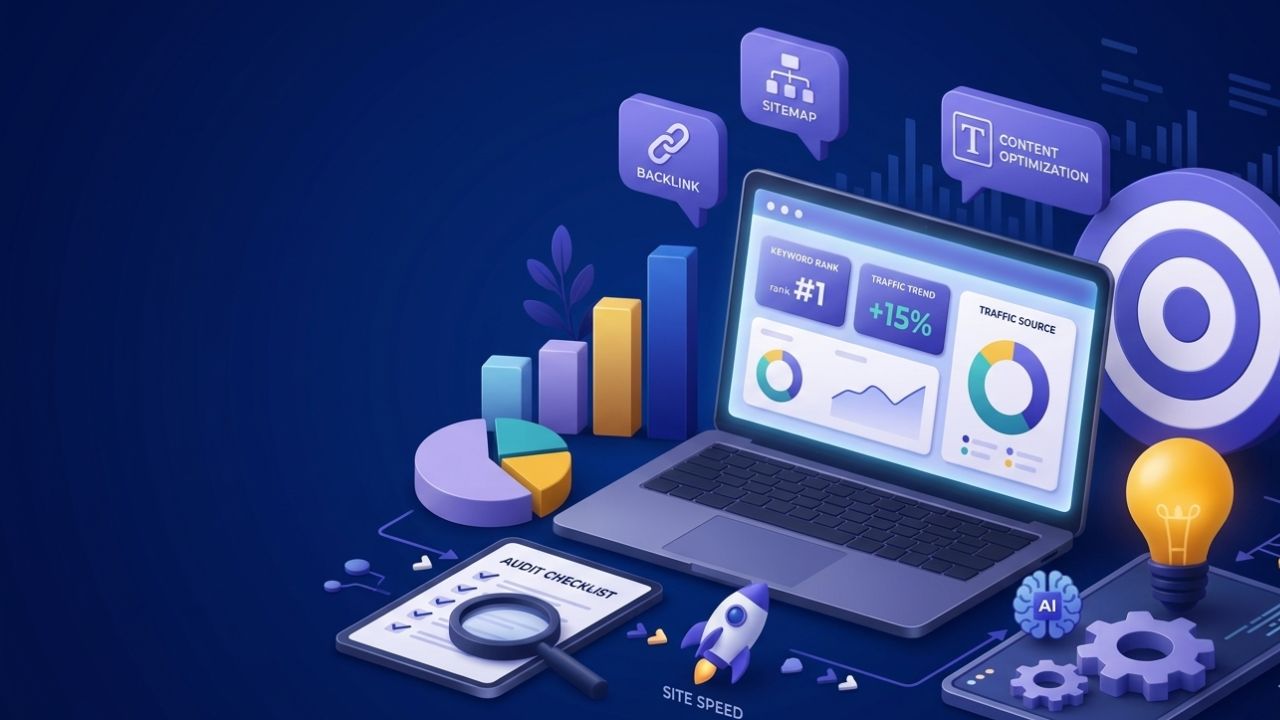
Content SEO 2026: The Technical Layer You Can’t Ignore
Great content without technical SEO is a brilliant book in a locked room.
Every piece of content needs:
- Clean, descriptive URL -primary keyword in the slug, under 60 characters
- Optimised title tag -under 60 characters, keyword near the front, compelling for CTR
- Meta description -150–160 characters, value-driven, soft CTA
- Schema markup -Article schema at minimum; FAQPage where applicable; Product schema for product-adjacent content
- Compressed, WebP-format images with descriptive alt text
- Mobile-optimised layout -over 70% of Indian organic traffic is mobile-first
- Page speed -LCP under 2.5 seconds across all devices
Content SEO isn’t a separate strategy from content marketing. It’s the technical layer that ensures the content you worked to create actually gets discovered, indexed, and ranked.
The Bottom Line on Content Marketing in 2026
Content marketing in 2026 is not a traffic hack. It’s a brand-building system.
The brands that do it well -that build topical authority, publish comprehensively, structure for AI extraction, and measure what matters -create an organic growth engine that compounds every year. The content published today will rank and convert for years.
The brands that treat it as a checkbox, publishing thin posts just to have something on the blog, will find the gap between themselves and content-led competitors widening every quarter.
The investment is the same either way. The outcomes are completely different.
Want a Content Marketing Strategy Built for Your Brand?

Frequently Asked Questions (FAQs)
Q1. How much content should I publish monthly?
Focus on quality and consistency. For most Indian businesses, 2-4 in-depth pieces per month outperform frequent low-quality posts.
Q2. How long does content marketing take to work?
Early signals appear in 6–8 weeks. Traffic grows in 3-6 months, while strong results typically take 9–18 months.
Q3. Is blogging still relevant in 2026?
Yes-if done right. High-quality, well-structured, SEO-optimised content still ranks and builds authority.
Q4. SEO content or social media-which is better?
SEO content drives long-term ROI. Social media supports reach. Ideally, use both together.
Q5. How to appear in Google AI Overviews?
Answer queries clearly, structure content well, use schema, and build topical authority consistently.
