Backlinks are still one of Google’s most powerful ranking signals in 2026.
That hasn’t changed. What has changed is everything around it – the tactics that work, the ones that get you penalised, and the context in which Google now evaluates the links pointing to your site.
In an era of AI-generated content flooding the web, Google is leaning harder than ever on backlinks as a human-verified trust signal. A link from a genuinely authoritative, relevant website carries more weight in 2026 than it did five years ago – precisely because it’s harder to fake.
This guide covers the link building strategies 2026 that actually move rankings – and the shortcuts that will quietly destroy your site’s authority.
Why Backlinks Still Matter in 2026
Backlinks still act as votes of confidence for your content.
What’s changed is how Google evaluates them-AI now looks deeper at relevance, authority, anchor patterns, and whether links are earned or manipulated.
A single link from a genuinely relevant, high-authority publication can outweigh 50 links from generic directories. Quality has always mattered. In 2026, it’s the only thing that matters.
Link Building Strategies That Still Work in 2026

1. Digital PR – The Highest-ROI Strategy
Digital PR means creating content that journalists, bloggers, and industry publications actually want to reference. Original research, industry surveys, proprietary data, expert commentary – content that gives the media something to cite.
Why it works in 2026: Journalists are under more pressure than ever to cite credible sources. If your brand publishes research or data that’s genuinely useful, links follow naturally – from publications your competitors could never buy their way into.
How to execute this:
- Conduct original surveys within your industry (100+ responses makes it citable)
- Publish an annual industry report with data your audience can’t get elsewhere
- Create “state of the industry” content that gets referenced year after year
- Pitch expert commentary to journalists covering your sector
This is the approach that builds the kind of backlink building 2026 that actually moves rankings – because these links come from domains with real editorial standards.
2. Resource Link Building
Every industry has “resources” or “tools” pages – curated lists of useful content that websites maintain for their audiences. Getting your best guides listed on these pages is one of the most sustainable off-page SEO tactics available.
The process:
- Identify the best guides and tools you’ve created
- Search for resource pages in your niche: [your topic] + “useful resources” or [your topic] + “recommended reading”
- Reach out with a brief, specific pitch explaining why your content adds value to their list
- Follow up once – not five times
This works because you’re offering genuine value to the curator, not asking them to do you a favour.
3. Strategic Guest Posting
Guest posting isn’t dead. What’s dead is the spray-and-pray approach of writing 300-word articles for any blog that will accept them.
Strategic guest posting means:
- Contributing genuinely expert content to relevant industry publications
- Targeting sites your actual audience reads – not just sites with high DR scores
- Writing posts that stand alone as valuable resources, not thinly veiled promotional pieces
- Building a relationship with the publication, not just extracting a link
For white-hat link building India, contributing to Indian business publications, industry blogs, and sector-specific media is particularly underutilised. The competition for placements in Tier 2 Indian publications is a fraction of what it is for global ones – and the relevance for Indian audiences is significantly higher.
4. Broken Link Building
This is methodical and genuinely useful: find dead links on authoritative pages in your niche and offer your content as a replacement.
Why site owners respond: they don’t want broken links on their pages. You’re solving their problem while earning yours.
The process:
- Use Ahrefs or Screaming Frog to find pages in your niche with broken outbound links
- Check whether you have (or can create) a better replacement for that content
- Reach out to the site owner explaining the broken link and offering your page as a replacement
- Keep the email short, specific, and genuinely helpful in tone
5. The Skyscraper Approach – Done Properly
The concept: find content that has earned lots of links, create a significantly better version, and reach out to the sites linking to the original.
Where most people go wrong: they create “better” content that’s only longer – not genuinely more useful, more updated, or more comprehensive. In 2026, length without depth isn’t a differentiator.
What actually works:
- Add original data or research the original lacks
- Update statistics and examples that have gone stale
- Add interactive elements, visuals, or frameworks the original doesn’t have
- Target the linking sites with a personalised pitch explaining what’s new
Done properly, this is still one of the most effective link building strategies 2026 for competitive keywords.
6. Unlinked Brand Mentions
Your brand is often mentioned online without links-these are the easiest backlinks to win.
Set up alerts (Ahrefs or Google Alerts), find unlinked mentions, and request a link. These convert better than cold outreach since the brand is already referenced.
Link Building Tactics to Avoid in 2026
These aren’t just ineffective – they actively risk manual penalties and algorithmic ranking drops.
Private Blog Networks (PBNs)
PBNs – networks of sites created specifically to generate links – are detectable at scale by Google’s systems. Any site that has relied heavily on PBN links in the past should treat this as a ticking clock. The short-term ranking boost comes with long-term deranking risk that’s not worth taking.
Paid Links Without Disclosure
Paying for links is against Google’s guidelines. This doesn’t mean all paid placements are penalised – sponsored content marked as such is generally fine. What Google penalises is unnatural link schemes where money exchanges hands for undisclosed followed links.
The risk has increased in 2026 as Google’s spam detection systems have become more sophisticated at identifying link velocity patterns and contextual signals that suggest paid placement.
Low-Quality Directory Submissions
Submitting to generic, irrelevant directories for the sake of a backlink provides no meaningful authority signal and can contribute to a toxic link profile over time. The only directory submissions worth pursuing are genuinely curated, industry-specific directories where real users actually browse.
Automated Link Building Tools
Tools that массовly submit your site or generate bulk links can quickly lead to Google penalties. A few high-quality, relevant backlinks always outperform large volumes of low-quality links.
How to Build Links in the Indian Market
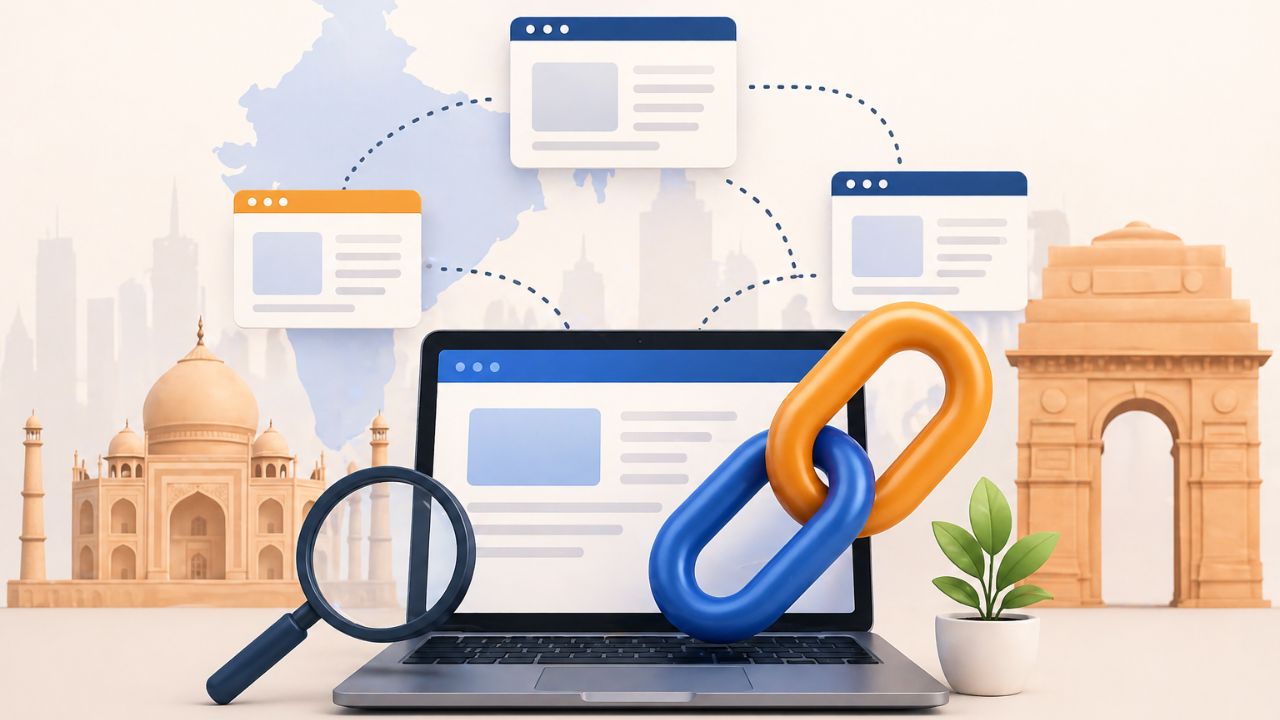
India offers strong white-hat link building opportunities. With rapid growth in digital media, new publications, niche platforms, and regional outlets provide valuable, relevant link sources.
Specific opportunities:
- Indian trade publications – almost every major sector has dedicated Indian publications that accept guest contributions
- Startup and SME media – YourStory, Inc42, Entrackr, and similar platforms regularly link to expert content and data
- Regional business chambers – many chamber of commerce websites link to member resources
- Academic and research institutions – Indian universities and research bodies link to industry data and reports
- Local PR – regional newspapers have digital editions with high domain authority and minimal link competition
The key insight: competition for Indian publication placements is a fraction of what it is internationally. A business that invests in relationships with Indian media can build a link profile that international competitors simply can’t replicate.
Tracking What’s Working
Link building without measurement is guesswork. Track these metrics monthly:
- New referring domains – not raw backlinks, but unique domains linking to you (quality > quantity)
- Domain authority trend – slowly rising over 6–12 months signals healthy acquisition
- Link velocity – consistent growth is healthy; sudden spikes are a red flag
- Anchor text distribution – natural profiles have a mix of branded, exact-match, and partial-match anchors
- Links from AI-cited sources – in 2026, links from content that itself appears in AI Overviews carry compounding value
The Bottom Line on Link Building in 2026
The fundamental principle hasn’t changed: earn links, don’t manufacture them.
What has changed is the sophistication with which Google evaluates whether a link was earned or manufactured. In 2026, that evaluation is better than it’s ever been – which means white-hat strategies have a larger advantage over shortcuts than ever before.
Invest in content worth linking to. Build relationships with publications in your space. Create original data that journalists want to cite. The brands that treat link building as a genuine editorial and PR discipline – not a technical shortcut – are the ones compounding authority year after year.
Want a Link Building Strategy Built for Your Business?
Frequently Asked Questions (FAQs)
Q1. How many backlinks do I need to rank in 2026?
There’s no fixed number-focus on quality and relevance vs competitors. Low-competition pages may rank with 5-10 strong links, while competitive niches may need 50-100.
Q2. Is guest posting still effective in 2026?
Yes, if done on relevant, high-quality sites. Avoid mass low-quality guest posts—focus on a few strong, audience-relevant publications.
Q3. How long do backlinks take to impact rankings?
Links are usually indexed in 2-8 weeks. Strong links can impact rankings quickly, while multiple mid-tier links build results over 2-4 months.
Q4. White-hat vs black-hat link building?
White-hat uses ethical, content-driven links for long-term gains. Black-hat uses manipulative tactics and risks penalties-best avoided in 2026.
Q5. Should I disavow toxic backlinks in 2026?
Not always necessary, as Google ignores many spam links. But for spam attacks or bad link history, a selective disavow still helps.
