AI-powered search is no longer a trend – it’s the new front page.
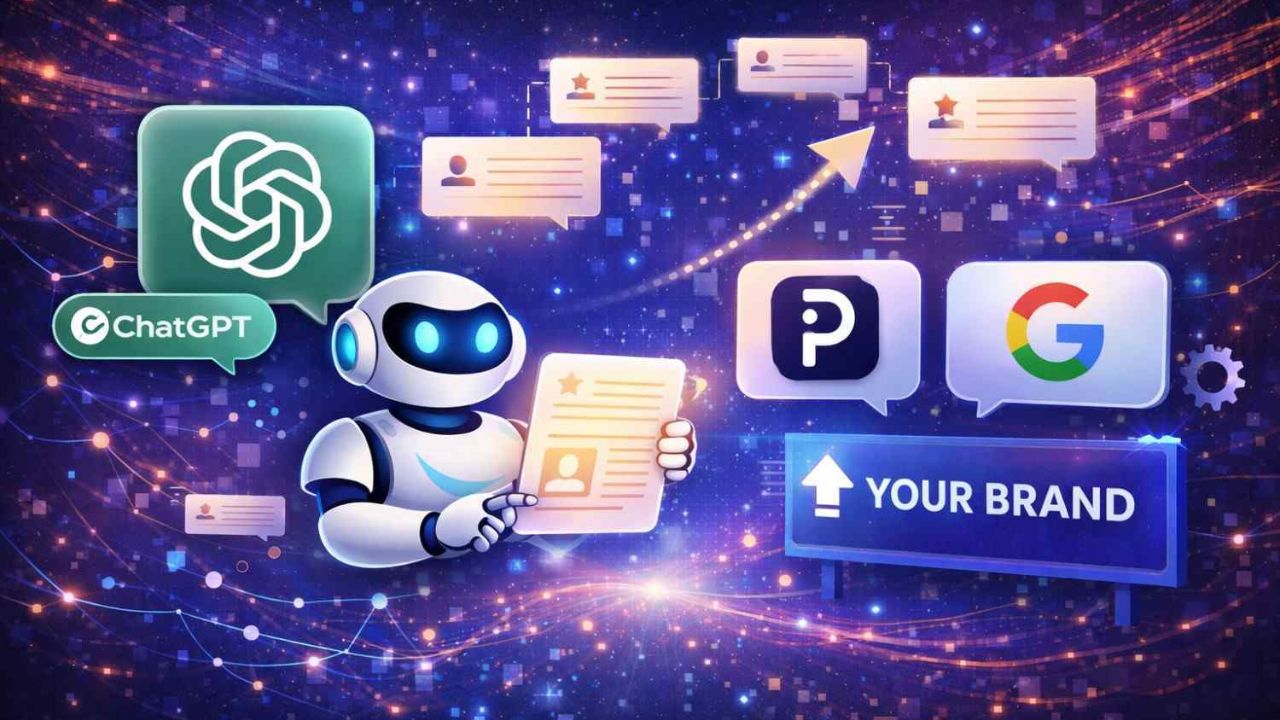
ChatGPT, Perplexity, and Google AI Overviews are now answering millions of queries daily, often without users ever clicking a link. And if your brand isn’t being cited inside those answers? You’re invisible where it matters most in 2026.
This guide breaks down exactly how to get cited by ChatGPT and other LLM-driven platforms – using proven tactics, not guesswork.
Why AI Brand Citations Matter More Than Rankings in 2026
Ten years ago, ranking #1 on Google was the holy grail. Today, the game has shifted.
When someone asks ChatGPT, “What’s the best SEO agency for e-commerce brands?” – it doesn’t pull a ranked list. It pulls trusted, frequently cited, well-structured sources from across the web.
That’s called an LLM mention – and earning one is the new SEO currency.
Here’s what’s at stake:
- Google AI Overviews now appear on over 47% of informational queries (Search Engine Land, 2025)
- Perplexity SEO signals are based heavily on structured content and citation frequency
- ChatGPT cites sources it has “seen often” across authoritative third-party platforms
If your brand doesn’t show up in these answers, a competitor’s does.
How ChatGPT, Perplexity & Google AI Actually Choose Sources
Before optimising, you need to understand how these systems work.
ChatGPT (GPT-4o / o3): It learns from large training datasets and real-time Bing-indexed content. It favours brands that appear consistently across blogs, forums, review platforms, and industry publications.
Perplexity AI: Unlike ChatGPT, Perplexity retrieves live web content for every query. Perplexity SEO is closer to traditional SEO – it rewards fast-loading, well-structured, factual pages with strong backlink profiles.
Google AI Overviews: Powered by Gemini, these pull from pages Google already trusts. If you rank in the top 10 and have structured, direct answers, you’re more likely to be cited.
Common thread across all three:
- Structured, clear content
- Authoritative third-party mentions
- Consistent brand signals across the web
- Original data or expert commentary
Build a Content Foundation That LLMs Love

This is where most brands drop the ball.
LLMs don’t reward vague, padded content. They reward specificity, structure, and expertise.
Create Structured Q&A Content
One of the most powerful formats for AI search visibility in 2026 is Q&A-style content. LLMs are trained to answer questions – so create content that mirrors that format.
Do this:
- Identify the exact questions your audience is typing into AI tools
- Build dedicated FAQ sections or standalone Q&A pages
- Use clear H2 questions followed by direct 2-3 sentence answers
Example: Instead of a generic blog titled “SEO Tips,” write “What SEO tactics work best for SaaS brands in 2026?” – that’s a query an LLM is actively trying to answer.
Publish Unique Data & Original Research
This is your biggest lever for AI brand citations.
ChatGPT, Perplexity, and Google AI Overviews love citing statistics and data – especially when they can’t find it anywhere else.
Tactics to try:
- Run a quarterly survey within your niche and publish the findings
- Create an annual industry report (even a 5-question survey counts)
- Build proprietary benchmarks – cost averages, conversion rates, churn data
Original data travels. It gets cited in blogs, shared on LinkedIn, and picked up by AI crawlers – all feeding back into your LLM mention frequency.
Build Authority Through Third-Party Citations
Think of AI brand citations like academic citations – the more credible sources reference you, the more an LLM trusts you.
This is off-page AI SEO, and it’s critical.
Get Featured on High-Authority Platforms
LLMs are trained heavily on content from:
- Industry publications (Search Engine Journal, Moz, HubSpot, Neil Patel)
- Review platforms (G2, Trustpilot, Capterra)
- Community forums (Reddit, Quora, industry Slack groups)
- Podcasts and YouTube transcripts
Your action plan:
- Pitch guest posts to publications your audience reads
- Ask satisfied clients to leave detailed, keyword-rich reviews on G2 or Trustpilot
- Participate in Reddit and Quora threads where you can add genuine expert insight
- Get interviewed on niche podcasts – transcripts get indexed and crawled
Leverage Digital PR for AI Visibility
A single feature in a publication like Forbes or Search Engine Land can generate hundreds of downstream citations across the web – dramatically improving your AI search visibility.
Quick wins:
- Use HARO (Help a Reporter Out) or Qwoted to offer expert commentary
- Comment on trending industry stories with a unique angle
- Publish newsworthy data that journalists will reference
Optimise Your On-Page Content for LLM Parsing
Even great content can get overlooked if it’s poorly structured.
Use Clear, Semantic Markup
LLMs parse content the way search bots do – they look for logical structure and contextual clarity.
On-page checklist:
- Use proper H1 > H2 > H3 hierarchy
- Add schema markup (FAQ schema, HowTo schema, Article schema)
- Keep paragraphs under 4 lines
- Use numbered lists for processes, bullet points for features
- Include your brand name naturally in key sections
Optimise for Conversational Queries
People talk to AI tools the way they talk to a person. Your content should mirror that.
Instead of targeting “SEO services,” optimise for “Which SEO agency should I hire for a small business in 2026?”
Use tools like AlsoAsked, AnswerThePublic, and Perplexity itself to discover how real users phrase AI queries.
Establish Your Brand as an Entity LLMs Recognise
This is the most underrated tactic in AI SEO.
Google and LLMs think in entities – named people, brands, products, and organisations. If your brand isn’t clearly defined as an entity across the web, AI tools won’t consistently reference it.
Build your entity footprint:
- Keep your brand name, description, and founding details consistent everywhere
- Create or claim a Wikipedia/Wikidata entry if eligible
- Maintain an updated Google Business Profile
- Publish author bio pages with credentials and links to published work
- Build a strong LinkedIn presence for yourself and your brand
This is how EEAT (Experience, Expertise, Authoritativeness, Trustworthiness) directly feeds into LLM trust signals.
Measure Your AI Citation Footprint

You can’t improve what you don’t track.
How to monitor LLM mentions:
- Manually query ChatGPT and Perplexity monthly: “What are the best [your service] companies?“
- Use tools like Brand24, Mention, or BrightEdge for AI mention tracking
- Check which of your pages are being pulled into Google AI Overviews via Search Console
- Track referral traffic from Perplexity in GA4 (it shows up as a traffic source)
Set a monthly cadence. Note which content gets cited and double down on that format.
Final Thoughts
Getting cited by ChatGPT, Perplexity, and Google AI Overviews isn’t about gaming a new algorithm. It’s about doing the fundamentals exceptionally well – original content, authoritative mentions, structured markup, and consistent brand signals.
The brands winning in AI search right now aren’t the biggest. They’re the most cited, most structured, and most trusted.
Start building that foundation today. The AI search landscape of 2026 rewards the brands that invested in visibility yesterday.
Frequently Asked Questions:
Q1. How long does it take for a brand to get cited by ChatGPT or Perplexity?
There’s no fixed timeline – it depends on how consistently your brand appears across authoritative sources. Generally, brands that actively publish original research, earn third-party mentions, and maintain a strong entity footprint start seeing LLM citations within 3–6 months of focused effort.
Q2. Do I need to rank on Google to get cited by AI tools?
Not always. While Google AI Overviews favour pages that already rank in the top 10, tools like Perplexity and ChatGPT pull from a broader range of indexed content. A well-structured blog post cited on Reddit, G2, or a niche publication can still get picked up – even without a top Google ranking.
Q3. What type of content is most likely to get cited by ChatGPT?
Content that is factual, specific, and structured. This includes original data and statistics, Q&A-format pages, how-to guides with clear steps, and expert commentary published on credible platforms. Vague, generic content rarely makes it into LLM responses.
Q4. Is AI SEO different from traditional SEO?
They share the same foundation – quality content, authority, and trust – but AI SEO places extra weight on entity recognition, structured Q&A formats, and third-party citation frequency. Think of AI SEO as traditional SEO with added emphasis on how well your brand is talked about across the web, not just how well your pages rank.
Q5. Can small brands realistically get cited by ChatGPT or Google AI Overviews?
Absolutely. LLMs don’t exclusively favour big brands – they favour well-cited, well-structured ones. A small agency that publishes a unique industry report, earns a few strong backlinks, and gets mentioned on Quora or a niche podcast has a real chance of appearing in AI-generated answers. Consistency and specificity beat brand size every time.
